Olive Oil Bread – Soft, Fragrant, and Easy to Make

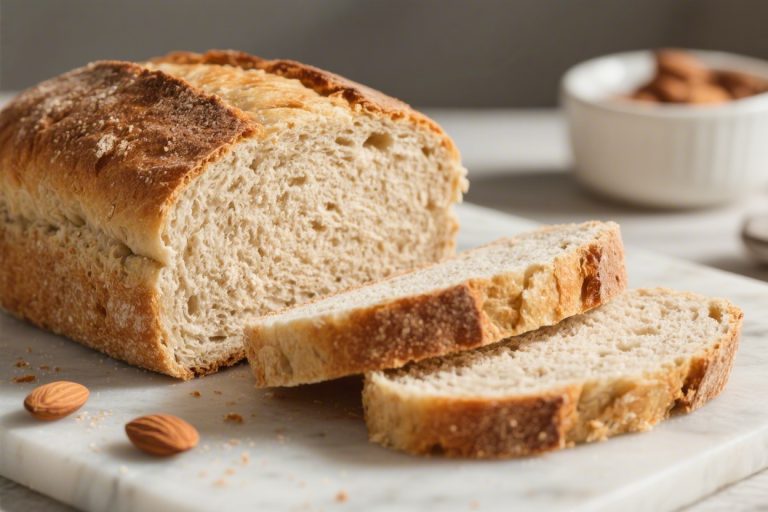
Olive oil bread is the kind of loaf you tear into while it’s still warm, the crust crackling softly and the crumb tender and springy.
It’s rich without being heavy, with a gentle olive aroma that pairs beautifully with soups, salads, or a simple plate of cheese. This is an approachable, forgiving recipe that doesn’t require special equipment or expert technique.
If you’ve been nervous about baking bread, this is a great place to start. It’s simple, reliable, and tastes like something you’d find in a cozy neighborhood bakery.
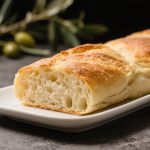
Olive Oil Bread - Soft, Fragrant, and Easy to Make
Ingredients
- Bread flour (3 1/2 cups / about 440 g)
- Warm water (1 1/4 cups / 300 ml, about 105–110°F)
- Extra-virgin olive oil (1/4 cup / 60 ml), plus more for brushing
- Instant or active dry yeast (2 1/4 tsp / 7 g)
- Sugar or honey (1 tbsp)
- Fine sea salt (2 tsp)
- Optional add-ins: chopped rosemary, lemon zest, cracked black pepper, flaky salt for topping
Instructions
- Proof the yeast (if using active dry). In a mixing bowl, stir warm water with sugar and yeast. Let it sit 5–10 minutes until foamy. If using instant yeast, you can skip proofing and mix it directly with the flour, but still warm the water.
- Combine the dry ingredients. In a large bowl, whisk together bread flour and salt. Make a well in the center.
- Add wet ingredients. Pour in the olive oil and the foamy yeast mixture (or warm water if using instant yeast). Stir with a wooden spoon until a shaggy dough forms.
- Knead the dough. Turn the dough onto a lightly floured surface. Knead for 8–10 minutes until smooth and elastic. The dough should be soft, slightly tacky, and bounce back when pressed.
- First rise. Place dough in a lightly oiled bowl, turning once to coat. Cover and let rise in a warm spot until doubled, about 1–1.5 hours.
- Shape the loaf. Gently deflate the dough. For a classic loaf, form a tight oval and pinch the seam. For a round, tuck the edges under to create surface tension. Place on a parchment-lined sheet or in a greased 9x5-inch loaf pan.
- Second rise. Cover and let rise until puffy and roughly 1 inch above the pan rim (or noticeably expanded on a sheet), about 35–50 minutes.
- Preheat the oven. Heat to 400°F (200°C). If you like extra crust, place a small metal pan on the bottom rack to add steam later.
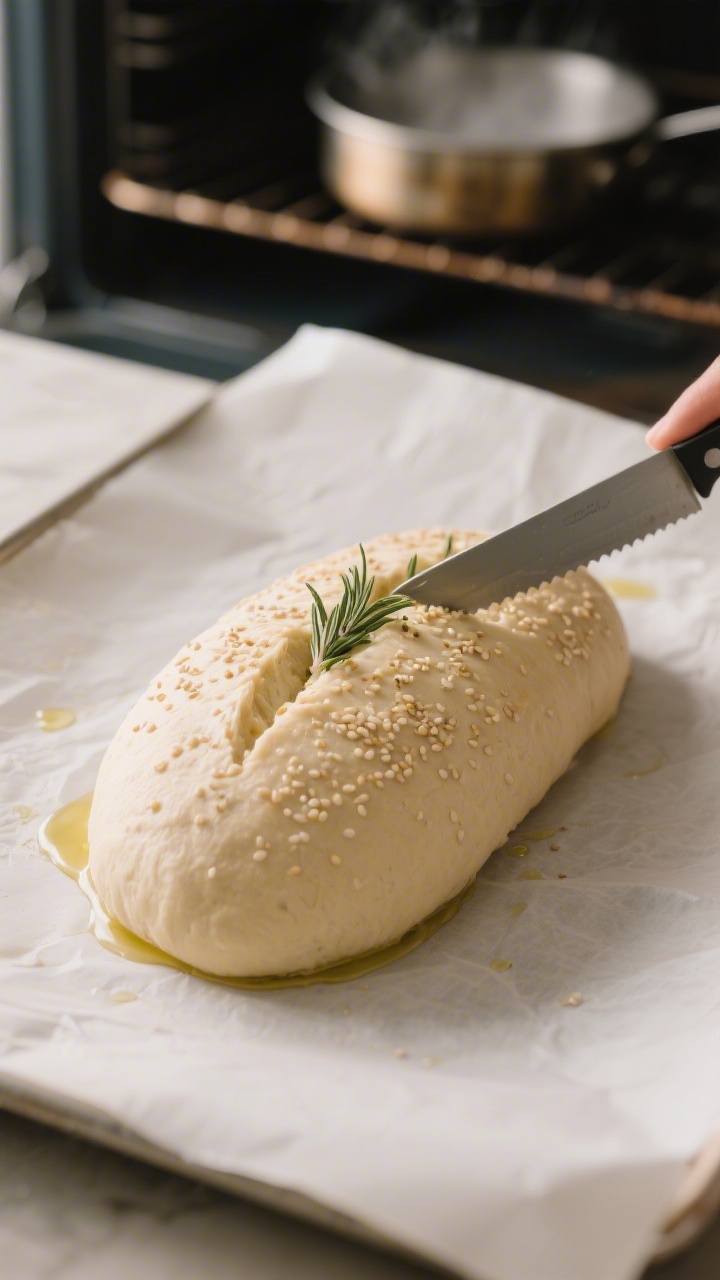
- Finish and score. Brush the top with olive oil. Sprinkle with flaky salt, rosemary, or pepper if using. Score a shallow slit down the center with a sharp knife for controlled expansion.
- Bake. Optional: add a cup of hot water to the preheated pan for steam. Bake 25–35 minutes until deep golden and the internal temp reaches about 200–205°F (93–96°C). The loaf should sound hollow when tapped.
- Cool. Transfer to a rack. Brush lightly with more olive oil for sheen and softness. Let cool at least 30 minutes before slicing to set the crumb.
Why This Recipe Works
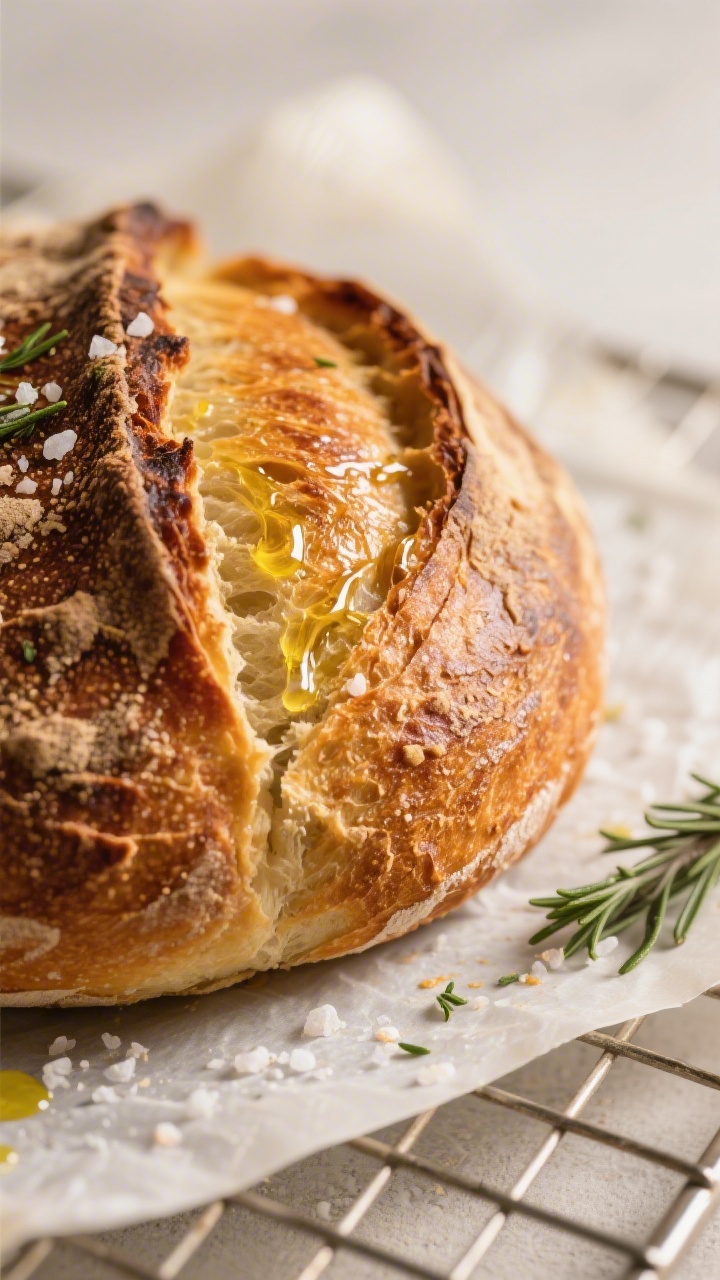
This recipe uses a blend of bread flour and olive oil to create a loaf that’s both sturdy and plush. The bread flour provides structure and chew, while the olive oil keeps the crumb moist for days.
A little sugar wakes up the yeast and helps with browning, and a slow first rise builds flavor. The dough is soft but not sticky, so it’s easy to knead and shape. You get a golden crust, a tender interior, and a clean olive finish without any fuss.
Shopping List
- Bread flour (3 1/2 cups / about 440 g)
- Warm water (1 1/4 cups / 300 ml, about 105–110°F)
- Extra-virgin olive oil (1/4 cup / 60 ml), plus more for brushing
- Instant or active dry yeast (2 1/4 tsp / 7 g)
- Sugar or honey (1 tbsp)
- Fine sea salt (2 tsp)
- Optional add-ins: chopped rosemary, lemon zest, cracked black pepper, flaky salt for topping
Step-by-Step Instructions
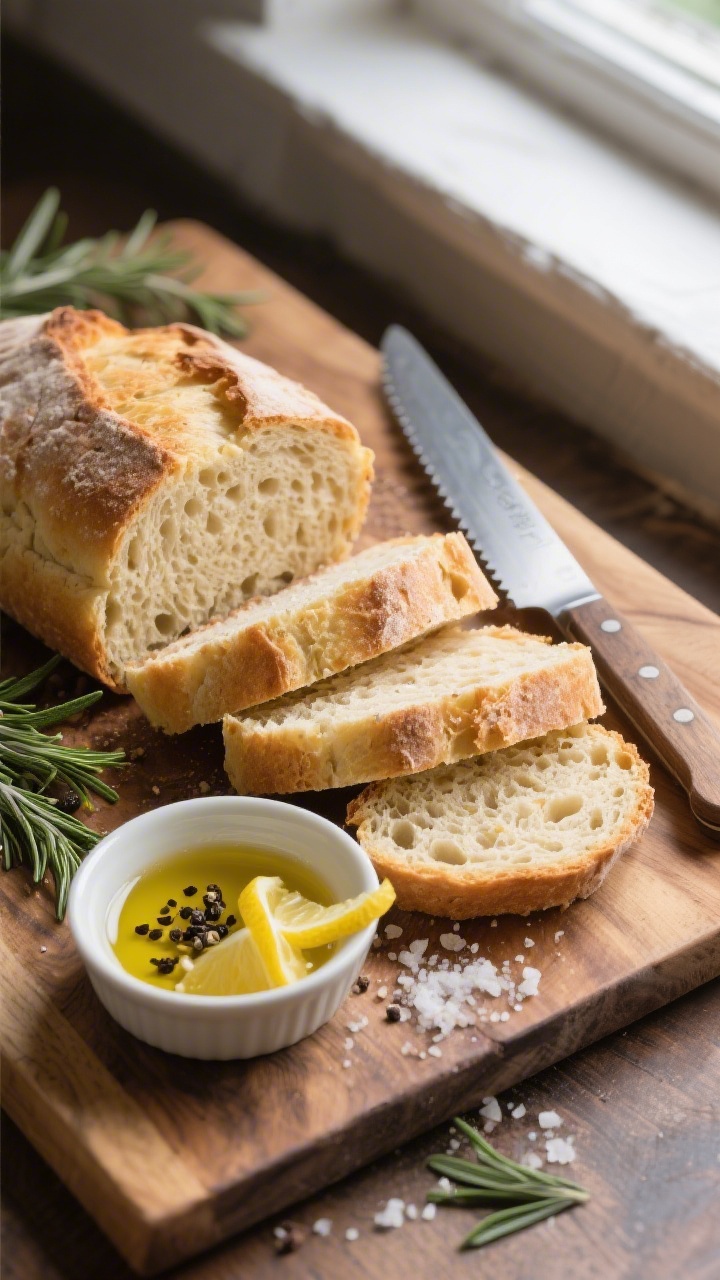
- Proof the yeast (if using active dry). In a mixing bowl, stir warm water with sugar and yeast.Let it sit 5–10 minutes until foamy. If using instant yeast, you can skip proofing and mix it directly with the flour, but still warm the water.
- Combine the dry ingredients. In a large bowl, whisk together bread flour and salt. Make a well in the center.
- Add wet ingredients. Pour in the olive oil and the foamy yeast mixture (or warm water if using instant yeast).Stir with a wooden spoon until a shaggy dough forms.
- Knead the dough. Turn the dough onto a lightly floured surface. Knead for 8–10 minutes until smooth and elastic. The dough should be soft, slightly tacky, and bounce back when pressed.
- First rise. Place dough in a lightly oiled bowl, turning once to coat.Cover and let rise in a warm spot until doubled, about 1–1.5 hours.
- Shape the loaf. Gently deflate the dough. For a classic loaf, form a tight oval and pinch the seam. For a round, tuck the edges under to create surface tension.Place on a parchment-lined sheet or in a greased 9×5-inch loaf pan.
- Second rise. Cover and let rise until puffy and roughly 1 inch above the pan rim (or noticeably expanded on a sheet), about 35–50 minutes.
- Preheat the oven. Heat to 400°F (200°C). If you like extra crust, place a small metal pan on the bottom rack to add steam later.
- Finish and score. Brush the top with olive oil. Sprinkle with flaky salt, rosemary, or pepper if using.Score a shallow slit down the center with a sharp knife for controlled expansion.
- Bake. Optional: add a cup of hot water to the preheated pan for steam. Bake 25–35 minutes until deep golden and the internal temp reaches about 200–205°F (93–96°C). The loaf should sound hollow when tapped.
- Cool. Transfer to a rack.Brush lightly with more olive oil for sheen and softness. Let cool at least 30 minutes before slicing to set the crumb.
How to Store
- Room temperature: Wrap in a clean kitchen towel or keep in a paper bag for a crisp crust, or in a zip-top bag for a softer crust. Keeps 2–3 days.
- Freezer: Slice, then freeze in a sealed bag for up to 2 months.Toast straight from frozen or thaw at room temp.
- Revive: For day-old bread, warm at 325°F (165°C) for 8–10 minutes to refresh the crust and aroma.
Why This is Good for You
Olive oil brings heart-healthy monounsaturated fats and polyphenols, which can support cardiovascular health. Unlike butter-heavy breads, this loaf is enriched with a fat that’s known for its anti-inflammatory benefits. It’s also satisfying without being greasy, so a slice or two keeps you full longer.
Pair it with lean proteins, soups, or a salad, and you have a balanced, comforting meal.
What Not to Do
- Don’t use cold water. Yeast needs warmth to wake up. Water that’s too cool slows the rise; water that’s too hot can kill the yeast.
- Don’t add too much flour. A slightly tacky dough bakes up tender. Over-flouring makes the bread dense and dry.
- Don’t skip the second rise. It sets the crumb structure and improves flavor and oven spring.
- Don’t cut it too soon. Slicing hot bread squashes the crumb and releases moisture, leading to a gummy texture.
- Don’t store in the fridge. Refrigeration stales bread quickly.Room temperature or freezer is best.
Variations You Can Try
- Herb and Lemon: Add 1–2 tablespoons chopped rosemary or thyme and 1 teaspoon lemon zest to the dough.
- Garlic Olive Oil Swirl: Brush the shaped loaf with olive oil mixed with 1 grated garlic clove, then roll and shape.
- Whole Wheat Boost: Swap 1 cup of bread flour for whole wheat flour. Add 1–2 tablespoons more water if needed.
- Olive Studded: Fold in 1/2 cup chopped pitted olives during the last minute of kneading for briny pops of flavor.
- Seeded Crust: Brush with olive oil and roll the top in sesame or poppy seeds before baking.
- Panini Loaf: Shape into a long oval and bake free-form for a rustic loaf perfect for sandwiches and grilling.
FAQ
Can I use all-purpose flour instead of bread flour?
Yes. The texture will be slightly less chewy and the rise a touch lower, but it will still be delicious.
You may need a tablespoon or two less water since all-purpose absorbs differently.
What olive oil should I use?
Use a good-quality extra-virgin olive oil with a flavor you enjoy. A fruity, medium-intensity oil is ideal. Avoid overly bitter or peppery oils unless you want a stronger bite.
How do I know my dough is kneaded enough?
It should feel smooth and elastic, and it should spring back when you press it lightly.
You can also do a windowpane test: stretch a small piece until thin—if it doesn’t tear immediately and lets light through, you’re there.
My kitchen is cold. How can I help the dough rise?
Place the covered bowl in an unheated oven with the light on, or near a warm appliance. You can also warm the bowl with hot water first and dry it before adding the dough.
Can I make this bread in a stand mixer?
Absolutely.
Use the dough hook on low to medium-low speed for about 6–8 minutes, until smooth and elastic. Keep an eye on hydration and add a spoonful of flour only if needed.
How do I get a crispier crust?
Use steam during the first 10 minutes of baking and avoid brushing the loaf with oil after it comes out. Bake on a preheated baking stone if you have one for better oven spring.
Is this bread good for toast and sandwiches?
Yes.
It toasts beautifully, with edges that crisp and a soft center. For sandwiches, let it cool completely before slicing to keep the slices even and sturdy.
Can I add cheese?
Yes. Fold in 1/2 to 3/4 cup grated Parmesan or shredded mozzarella during the last minute of kneading.
Keep an eye on browning, as cheese can darken faster.
Wrapping Up
Olive oil bread is simple baking at its best—comforting, fragrant, and endlessly versatile. With a few pantry staples and a little patience, you’ll have a loaf that feels special any night of the week. Keep the process relaxed, trust the rises, and let the olive oil shine.
Once you make it, it’s bound to become a regular in your kitchen.
Printable Recipe Card
Want just the essential recipe details without scrolling through the article? Get our printable recipe card with just the ingredients and instructions.