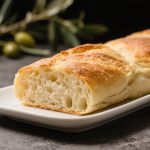
Olive Oil Bread - Soft, Fragrant, and Easy to Make
Servings: 8 servings
Ingredients
- Bread flour (3 1/2 cups / about 440 g)
- Warm water (1 1/4 cups / 300 ml, about 105–110°F)
- Extra-virgin olive oil (1/4 cup / 60 ml), plus more for brushing
- Instant or active dry yeast (2 1/4 tsp / 7 g)
- Sugar or honey (1 tbsp)
- Fine sea salt (2 tsp)
- Optional add-ins: chopped rosemary, lemon zest, cracked black pepper, flaky salt for topping
Instructions
- Proof the yeast (if using active dry). In a mixing bowl, stir warm water with sugar and yeast. Let it sit 5–10 minutes until foamy. If using instant yeast, you can skip proofing and mix it directly with the flour, but still warm the water.
- Combine the dry ingredients. In a large bowl, whisk together bread flour and salt. Make a well in the center.
- Add wet ingredients. Pour in the olive oil and the foamy yeast mixture (or warm water if using instant yeast). Stir with a wooden spoon until a shaggy dough forms.
- Knead the dough. Turn the dough onto a lightly floured surface. Knead for 8–10 minutes until smooth and elastic. The dough should be soft, slightly tacky, and bounce back when pressed.
- First rise. Place dough in a lightly oiled bowl, turning once to coat. Cover and let rise in a warm spot until doubled, about 1–1.5 hours.
- Shape the loaf. Gently deflate the dough. For a classic loaf, form a tight oval and pinch the seam. For a round, tuck the edges under to create surface tension. Place on a parchment-lined sheet or in a greased 9x5-inch loaf pan.
- Second rise. Cover and let rise until puffy and roughly 1 inch above the pan rim (or noticeably expanded on a sheet), about 35–50 minutes.
- Preheat the oven. Heat to 400°F (200°C). If you like extra crust, place a small metal pan on the bottom rack to add steam later.
- Finish and score. Brush the top with olive oil. Sprinkle with flaky salt, rosemary, or pepper if using. Score a shallow slit down the center with a sharp knife for controlled expansion.
- Bake. Optional: add a cup of hot water to the preheated pan for steam. Bake 25–35 minutes until deep golden and the internal temp reaches about 200–205°F (93–96°C). The loaf should sound hollow when tapped.
- Cool. Transfer to a rack. Brush lightly with more olive oil for sheen and softness. Let cool at least 30 minutes before slicing to set the crumb.