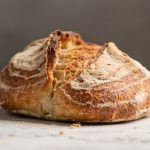
Crusty Artisan Bread
Servings: 8 servings
Ingredients
- Bread flour (or all-purpose flour), about 3 1/4 cups (400 g)
- Warm water, 1 1/2 cups (360 ml), around 95–100°F (35–38°C)
- Instant or active dry yeast, 1/2 teaspoon
- Fine sea salt, 1 1/4 teaspoons
- Optional add-ins: Fresh rosemary, garlic, grated Parmesan, seeds (sesame, poppy, sunflower), or chopped olives
- Cornmeal or parchment paper for handling the dough
Instructions
- Mix the dough: In a large bowl, whisk flour, yeast, and salt. Add warm water and stir with a spoon until a shaggy, sticky dough forms. It will look rough—this is right.
- First rest (bulk rise): Cover the bowl with plastic wrap or a damp towel and let it sit at room temperature for 8–12 hours, or until doubled and bubbly on the surface. A cooler kitchen might need 14–16 hours.
- Chill for easier handling (optional): If the dough is very sticky, refrigerate it for 30–60 minutes. Cooler dough is easier to shape.
- Shape the loaf: Lightly flour your counter and hands. Gently turn out the dough and fold the edges into the center a few times to create surface tension. Flip seam-side down and cup your hands to form a tight round ball.
- Second rise: Place the dough seam-side down on a piece of parchment dusted with flour or cornmeal. Cover loosely and let rise 45–60 minutes, until puffy. It should spring back slowly when poked.
- Preheat the oven and pot: About 30 minutes before baking, put a Dutch oven (with lid) in the oven and preheat to 450°F (230°C). The pot needs to be very hot.
- Score the dough: Using a sharp knife or razor, make a 1/2-inch deep slash across the top. This controls the expansion and gives that artisan look.
- Bake covered: Carefully remove the hot pot. Lift the dough on the parchment and lower it into the pot. Cover and bake for 30 minutes. The steam will build the crust.
- Finish uncovered: Remove the lid and bake another 12–18 minutes, until the crust is a deep golden-brown and the internal temperature reaches about 205–210°F (96–99°C).
- Cool completely: Transfer to a rack and let cool at least 1 hour before slicing. This sets the crumb and prevents gumminess.