Hummus With Veggie Sticks and Gluten Free Crackers – A Fresh, Easy Snack Platter

Hummus with crunchy veggies and gluten‑free crackers is the kind of snack that feels satisfying any time of day. It’s creamy, bright, and full of flavor, and it comes together in minutes.
Whether you’re feeding a crowd or just yourself, this platter is simple to assemble and always hits the spot.
It’s also naturally dairy‑free, budget‑friendly, and easy to customize. Keep it classic or add your own twist—either way, it’s a keeper.
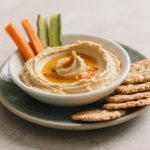
Hummus With Veggie Sticks and Gluten‑Free Crackers – A Fresh, Easy Snack Platter
Ingredients
- For the hummus: 1 can (15 oz) chickpeas, drained and rinsed
- 3 tablespoons tahini (well‑stirred)
- 2 tablespoons fresh lemon juice (plus more to taste)
- 1 small garlic clove, minced (or 1/2 if you prefer milder)
- 2–3 tablespoons cold water (as needed for texture)
- 2 tablespoons extra‑virgin olive oil, plus more for drizzling
- 1/2 teaspoon ground cumin
- 1/2 teaspoon fine sea salt (adjust to taste)
- Optional: pinch of smoked paprika or cayenne for heat
- For serving: Gluten‑free crackers (seeded or rice‑based work well)
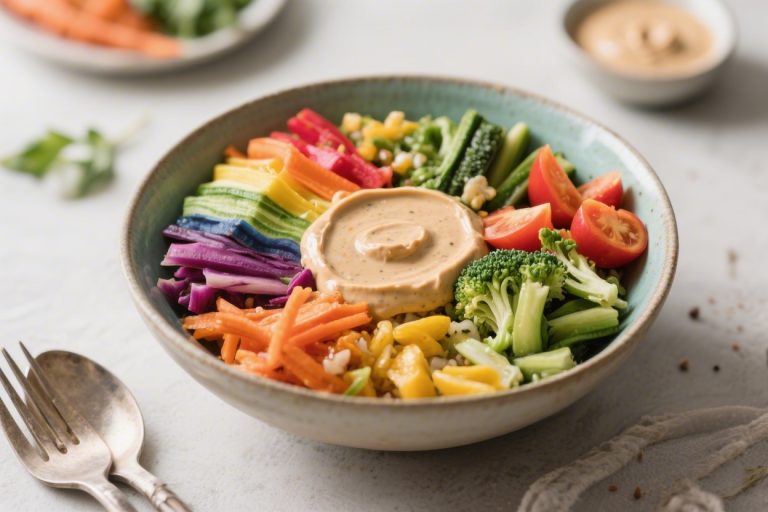
- Carrot sticks
- Cucumber sticks or rounds
- Celery sticks
- Bell pepper strips (any color)
- Cherry tomatoes
- Optional extras: radishes, snap peas, endive leaves, olives
- Optional toppings: chopped parsley, toasted sesame seeds, sumac, or a sprinkle of paprika
Instructions
- Prep the chickpeas: Rinse and drain well. For extra‑smooth hummus, slip off some of the skins by gently rubbing the chickpeas in a clean kitchen towel. It’s optional but makes a difference.
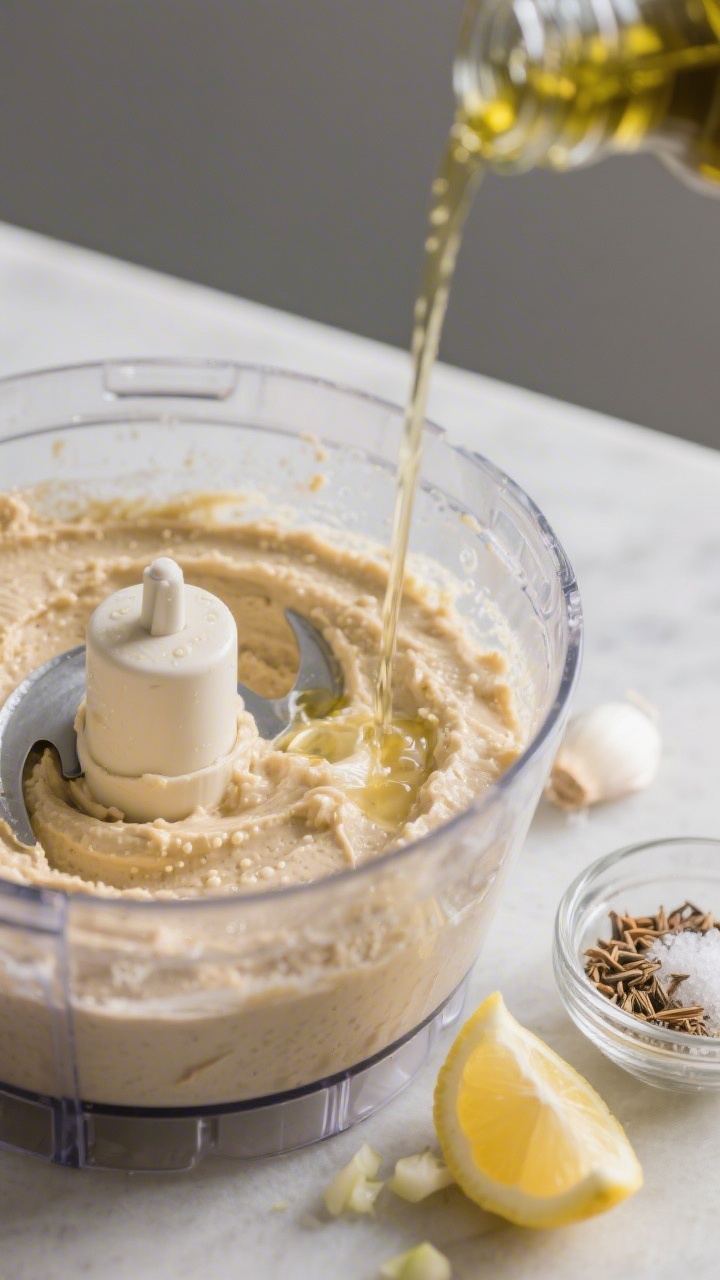
- Blend the base: In a food processor, combine tahini, lemon juice, and garlic. Process 20–30 seconds until creamy and slightly pale. This step helps whip the tahini so the hummus turns out ultra‑smooth.
- Add chickpeas and spices: Add chickpeas, cumin, and salt. Blend, scraping down the sides as needed. With the machine running, drizzle in olive oil, then 2 tablespoons cold water. Blend until very smooth. Add more water, 1 teaspoon at a time, to reach your preferred texture.
- Taste and adjust: Add more lemon, salt, cumin, or a pinch of paprika or cayenne. The flavor should be bright, nutty, and well‑seasoned.
- Prep the veggies: Slice carrots, cucumbers, celery, and peppers into sturdy sticks. Halve cherry tomatoes. Keep sizes consistent so they’re easy to dip.
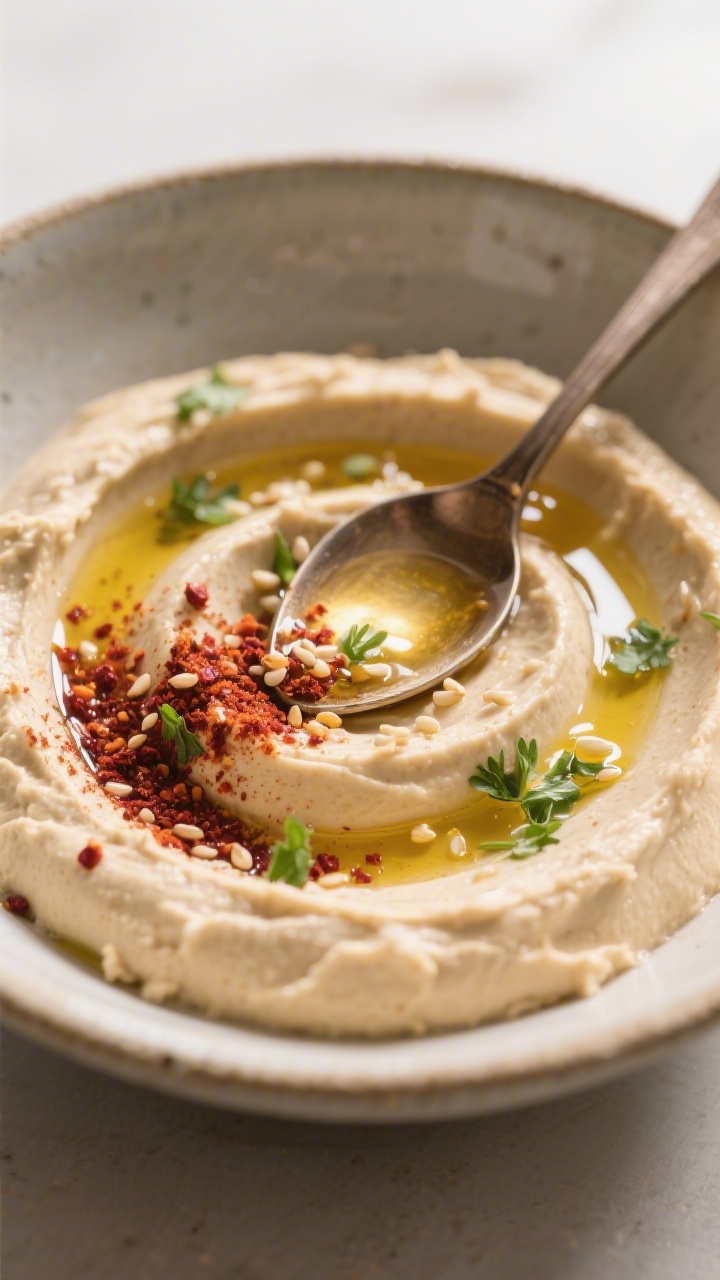
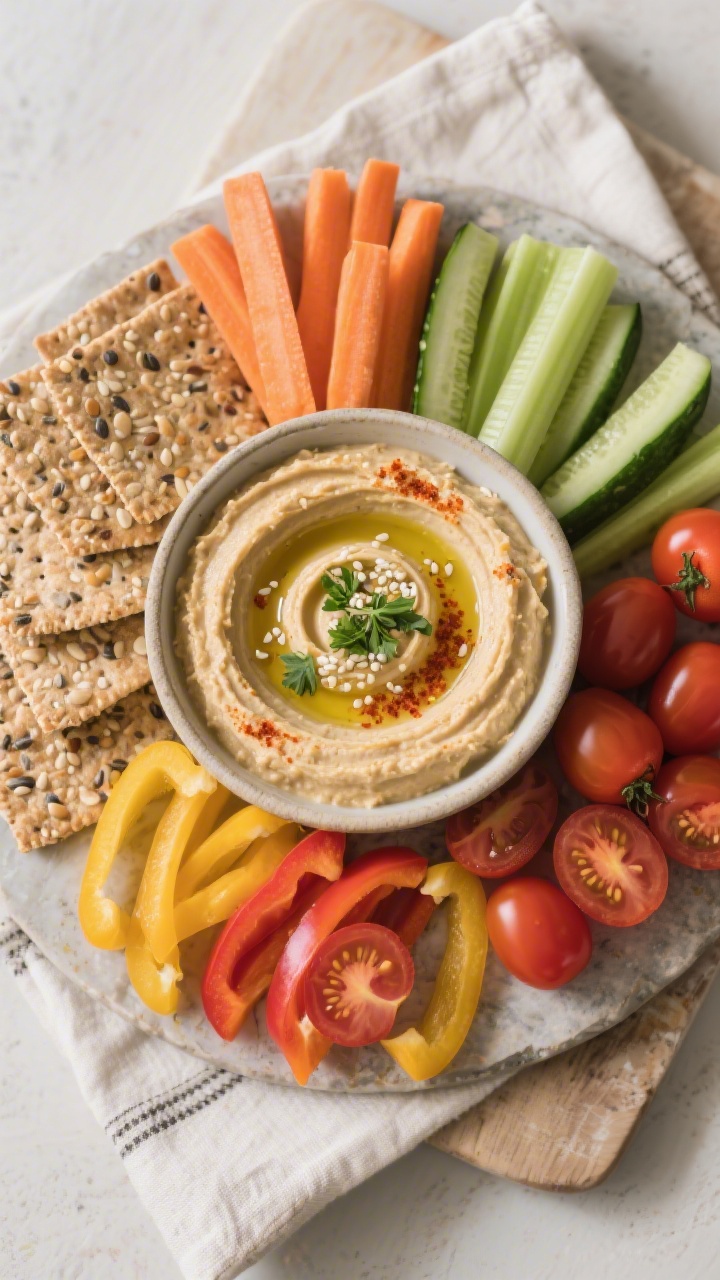
- Plate it up: Spoon the hummus into a shallow bowl. Swirl the top with the back of a spoon, drizzle with olive oil, and finish with parsley, sesame seeds, sumac, or paprika. Arrange veggie sticks and gluten‑free crackers around the bowl.
- Serve: Bring to the table and dig in while everything is crisp and fresh.
What Makes This Recipe So Good
- Fast and foolproof: You can make the hummus in 10 minutes with pantry staples. No cooking required.
- Balanced and filling: Chickpeas add protein and fiber, while veggies bring crunch and freshness.Crackers round it out with a satisfying snap.
- Diet‑friendly: Naturally vegetarian, dairy‑free, and gluten‑free when you choose the right crackers.
- Great for meal prep: The hummus holds well in the fridge, and prepped veggies stay crisp for days.
- Customizable: Change the toppings, spices, or mix‑ins to keep it interesting all week.
What You’ll Need
- For the hummus:
- 1 can (15 oz) chickpeas, drained and rinsed
- 3 tablespoons tahini (well‑stirred)
- 2 tablespoons fresh lemon juice (plus more to taste)
- 1 small garlic clove, minced (or 1/2 if you prefer milder)
- 2–3 tablespoons cold water (as needed for texture)
- 2 tablespoons extra‑virgin olive oil, plus more for drizzling
- 1/2 teaspoon ground cumin
- 1/2 teaspoon fine sea salt (adjust to taste)
- Optional: pinch of smoked paprika or cayenne for heat
- For serving:
- Gluten‑free crackers (seeded or rice‑based work well)
- Carrot sticks
- Cucumber sticks or rounds
- Celery sticks
- Bell pepper strips (any color)
- Cherry tomatoes
- Optional extras: radishes, snap peas, endive leaves, olives
- Optional toppings: chopped parsley, toasted sesame seeds, sumac, or a sprinkle of paprika
Instructions
- Prep the chickpeas: Rinse and drain well. For extra‑smooth hummus, slip off some of the skins by gently rubbing the chickpeas in a clean kitchen towel. It’s optional but makes a difference.
- Blend the base: In a food processor, combine tahini, lemon juice, and garlic.Process 20–30 seconds until creamy and slightly pale. This step helps whip the tahini so the hummus turns out ultra‑smooth.
- Add chickpeas and spices: Add chickpeas, cumin, and salt. Blend, scraping down the sides as needed.With the machine running, drizzle in olive oil, then 2 tablespoons cold water. Blend until very smooth. Add more water, 1 teaspoon at a time, to reach your preferred texture.
- Taste and adjust: Add more lemon, salt, cumin, or a pinch of paprika or cayenne.The flavor should be bright, nutty, and well‑seasoned.
- Prep the veggies: Slice carrots, cucumbers, celery, and peppers into sturdy sticks. Halve cherry tomatoes. Keep sizes consistent so they’re easy to dip.
- Plate it up: Spoon the hummus into a shallow bowl.Swirl the top with the back of a spoon, drizzle with olive oil, and finish with parsley, sesame seeds, sumac, or paprika. Arrange veggie sticks and gluten‑free crackers around the bowl.
- Serve: Bring to the table and dig in while everything is crisp and fresh.
Keeping It Fresh
- Storage: Refrigerate hummus in an airtight container for up to 5–6 days. Press a piece of parchment or plastic wrap directly on the surface to prevent drying.
- Veggie prep: Store cut veggies in containers lined with paper towels.Keep cucumbers and peppers separate from carrots and celery to prevent excess moisture.
- Revive hummus: If it thickens in the fridge, stir in a splash of cold water or a bit of lemon juice and olive oil to loosen and brighten.
- Cracker care: Keep gluten‑free crackers sealed and dry. They can stale quickly once the box is opened.
Benefits of This Recipe
- Nutritious and satisfying: Chickpeas deliver plant protein and fiber, helping you feel full longer.
- Steady energy: Healthy fats from tahini and olive oil support satiety without weighing you down.
- Veggie‑forward: A colorful mix of vegetables adds vitamins, minerals, and crunch.
- Allergy‑friendly: With gluten‑free crackers, this platter suits many dietary needs and is easy to share.
- Versatile: Works as a snack, light lunch, picnic item, or party starter.
Common Mistakes to Avoid
- Skipping the tahini: Hummus without tahini tastes flat and lacks creaminess. Use fresh, well‑stirred tahini for best results.
- Not whipping the tahini first: Blending tahini with lemon and garlic before adding chickpeas makes the texture smoother.Don’t rush this step.
- Under‑seasoning: Salt and acid bring hummus to life. Taste and adjust until it pops.
- Using warm water: Cold water helps emulsify and makes hummus fluffier. Add it slowly.
- Choosing flimsy dippers: Thin veggie slices or delicate crackers can break.Cut sturdier sticks and choose robust gluten‑free crackers.
Alternatives
- Bean swap: Use white beans or a chickpea‑white bean blend for a silkier texture and milder flavor.
- Flavor twists: Try roasted red pepper, caramelized onion, sundried tomato, or roasted garlic hummus. Add the mix‑ins after the base is smooth.
- Spice blends: Sprinkle za’atar, everything bagel seasoning, or chili crisp on top for a fresh take.
- Tahini substitutes: If you’re out of tahini, use almond butter or sunflower seed butter. Expect a slightly different, but still tasty, result.
- Dipper variety: Add gluten‑free pita, baked tortilla chips, warmed corn tortillas, or crisp lettuce cups for more options.
FAQ
Can I make hummus without a food processor?
Yes.
A high‑speed blender works, but you may need to stop and scrape often and add a bit more water. In a pinch, mash by hand with a potato masher for a rustic texture.
Do I need to peel the chickpeas?
No, but peeling some of them helps create a smoother hummus. If you’re short on time, skip it and blend longer with a touch more water.
Is all hummus gluten‑free?
The hummus itself typically is, but always check labels for additives.
The key is pairing it with certified gluten‑free crackers to keep the whole platter gluten‑free.
How do I fix bitter hummus?
Add more lemon juice, a pinch of salt, and a small drizzle of olive oil. If your tahini is very bitter, try a different brand or add a tiny bit of maple syrup to balance it.
Can I use dried chickpeas?
Absolutely. Cook 1/2 cup dried chickpeas until tender (about 1 1/2 cups cooked).
For extra silkiness, add a pinch of baking soda to the cooking water and peel some skins after cooking.
What if my hummus is too thin?
Blend in a few extra chickpeas or 1–2 teaspoons tahini. Chilling also helps it firm up slightly.
What veggies work best for dipping?
Carrots, cucumbers, celery, bell peppers, snap peas, radishes, and cherry tomatoes hold up well. Aim for crisp, sturdy shapes that won’t bend or break.
In Conclusion
This hummus platter is a fresh, reliable staple you can make anytime.
With creamy hummus, crunchy veggies, and gluten‑free crackers, it covers all the bases: flavor, texture, and nourishment.
Keep it classic or play with toppings and mix‑ins to match your mood. It’s easy to prep ahead and even easier to share.
Keep a batch in the fridge, and snacking well becomes effortless.
Printable Recipe Card
Want just the essential recipe details without scrolling through the article? Get our printable recipe card with just the ingredients and instructions.