
Honey Oat Bread – Soft, Hearty, and Comforting

Warm, slightly sweet, and tender, honey oat bread is the kind of loaf that turns a simple slice into a treat.
It’s easy to make at home and rewards you with a cozy aroma that fills the kitchen. This bread has a soft crumb, a gentle honey note, and a wholesome chew from oats.
It’s perfect for toast, sandwiches, or just a warm slice with butter. If you’re new to bread baking, this is a friendly place to start.
Honey Oat Bread - Soft, Hearty, and Comforting
Ingredients
- 2 1/2 cups (300 g) bread flour, plus more as needed
- 1 cup (90 g) old-fashioned rolled oats, divided (3/4 cup for the dough, 1/4 cup for topping)
- 1 cup (240 ml) warm milk, about 105–110°F (40–43°C)
- 1/3 cup (80 ml) warm water, about 105–110°F (40–43°C)
- 1/4 cup (85 g) honey
- 3 tablespoons (42 g) unsalted butter, melted and slightly cooled
- 2 1/4 teaspoons (7 g) instant or active dry yeast
- 1 1/2 teaspoons fine sea salt
- 1 large egg (optional, for egg wash)
- 1 tablespoon milk (for egg wash)
- Neutral oil or butter, for greasing the bowl and pan
Instructions
- Bloom the yeast (if using active dry): In a small bowl, whisk warm water and honey. Sprinkle in the yeast and let it sit 5–10 minutes until foamy. If using instant yeast, skip the bloom and add the yeast directly to the flour later, but still warm the water with the honey.
- Combine dry ingredients: In a large bowl, mix bread flour, 3/4 cup oats, and salt. If using instant yeast, add it now and whisk to distribute.
- Add liquids: Pour in warm milk, honey mixture (and bloomed yeast if applicable), and melted butter. Stir with a wooden spoon until a shaggy dough forms. If it’s very sticky, sprinkle in 1–2 tablespoons more flour.
- Knead the dough: Turn the dough onto a lightly floured surface and knead 8–10 minutes until smooth and slightly tacky but not sticky. You can also use a stand mixer with a dough hook on medium-low for 6–8 minutes. The dough should stretch without tearing easily.
- First rise: Shape into a ball and place in a lightly greased bowl. Cover and let rise in a warm spot until doubled, about 60–90 minutes. A finger pressed lightly into the dough should leave a soft indentation that springs back slowly.
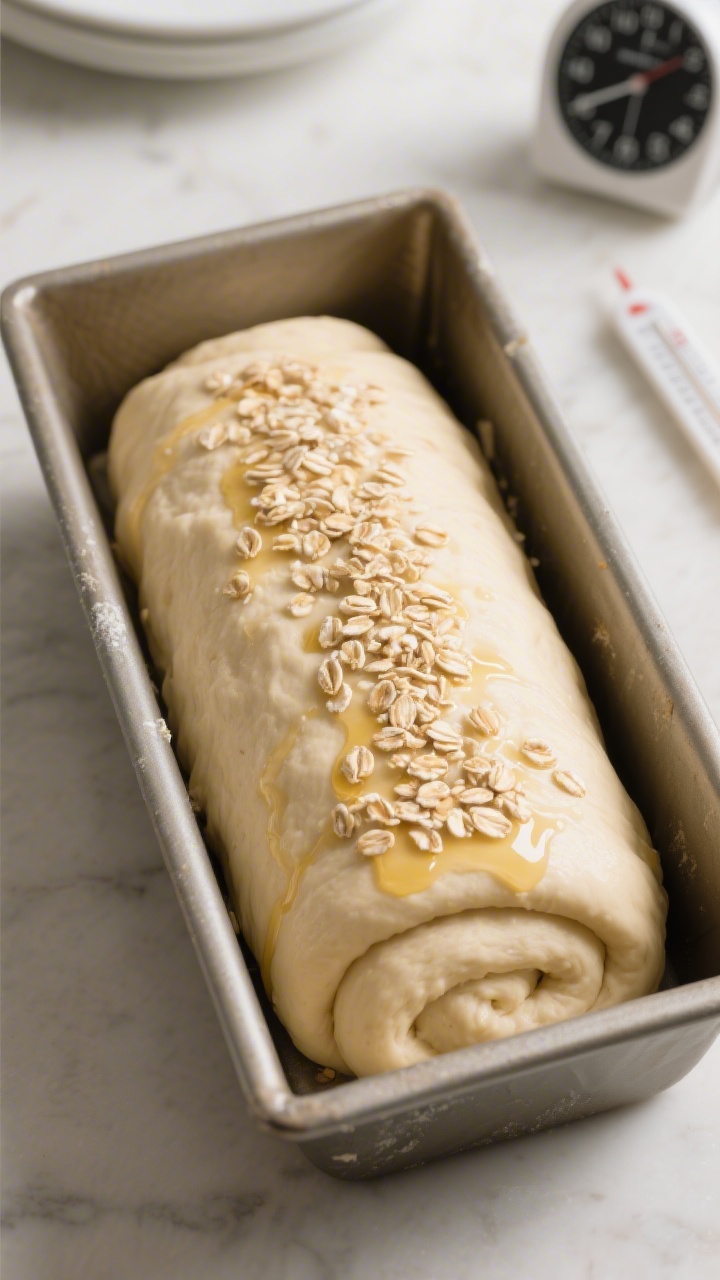
- Shape the loaf: Gently deflate the dough. Pat into a rectangle about 8x12 inches. Roll it up tightly from the short side into a log, pinching the seam. Tuck the ends under for a neat shape.
- Prepare the pan: Grease a 9x5-inch loaf pan. Place the dough seam-side down in the pan.
- Top with oats: For a classic look, whisk the egg with 1 tablespoon milk to make an egg wash. Brush the top of the loaf and sprinkle with the remaining 1/4 cup oats, pressing lightly so they stick. For an egg-free option, brush with milk or water and add oats.
- Second rise: Cover the pan and let the dough rise until it domes about 1 inch above the rim, 35–55 minutes depending on room temperature. Preheat the oven to 350°F (175°C) during this time.
- Bake: Bake 30–38 minutes, until the top is deep golden and the loaf sounds hollow when tapped. An instant-read thermometer inserted in the center should read about 195–200°F (90–93°C).
- Finish: Cool in the pan for 10 minutes, then turn out onto a wire rack. For a soft, shiny crust, brush the warm loaf with a little melted butter. Let cool at least 45–60 minutes before slicing.
Why This Recipe Works
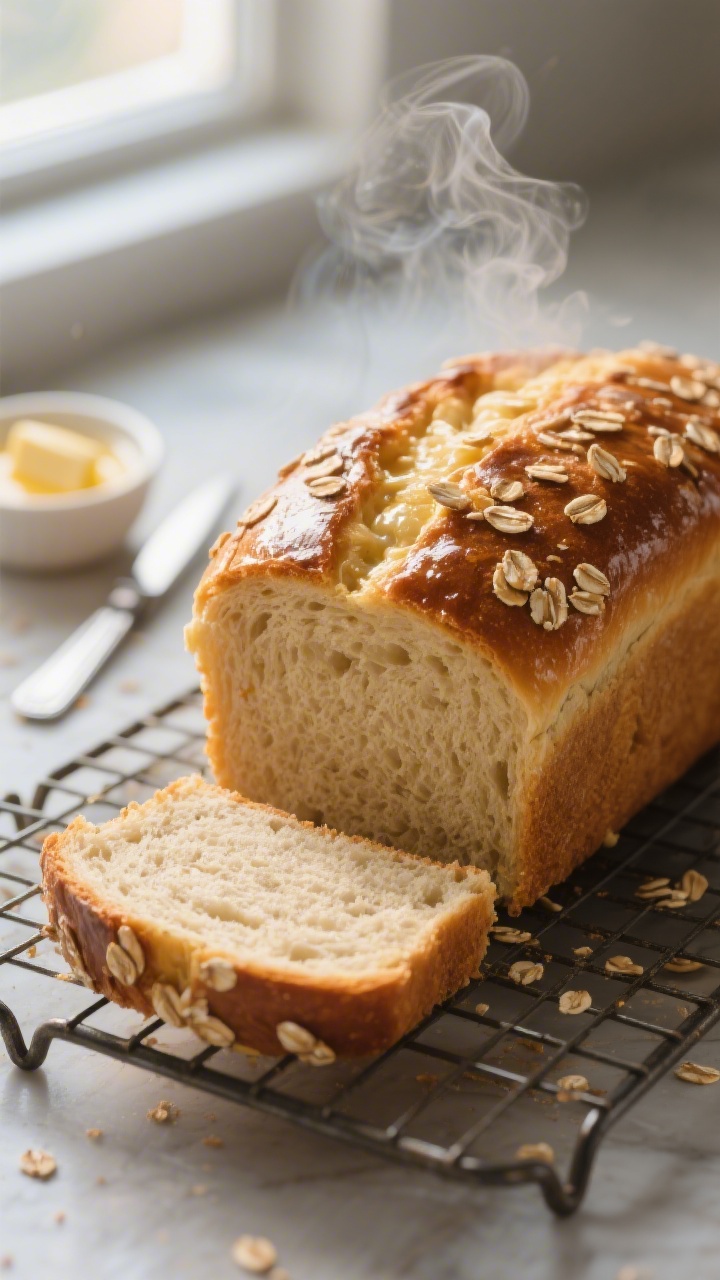
This loaf balances strong bread flour with soft, hearty oats, creating a texture that’s sturdy yet tender. Honey brings natural sweetness and helps the crust caramelize to a lovely golden color.
A bit of butter adds richness without weighing the bread down. The dough stays soft and workable, and the oats on top give it a classic bakery look and a light crunch. With reliable rise times and simple steps, this recipe is approachable and consistent.
Ingredients
- 2 1/2 cups (300 g) bread flour, plus more as needed
- 1 cup (90 g) old-fashioned rolled oats, divided (3/4 cup for the dough, 1/4 cup for topping)
- 1 cup (240 ml) warm milk, about 105–110°F (40–43°C)
- 1/3 cup (80 ml) warm water, about 105–110°F (40–43°C)
- 1/4 cup (85 g) honey
- 3 tablespoons (42 g) unsalted butter, melted and slightly cooled
- 2 1/4 teaspoons (7 g) instant or active dry yeast
- 1 1/2 teaspoons fine sea salt
- 1 large egg (optional, for egg wash)
- 1 tablespoon milk (for egg wash)
- Neutral oil or butter, for greasing the bowl and pan
Instructions
- Bloom the yeast (if using active dry): In a small bowl, whisk warm water and honey.Sprinkle in the yeast and let it sit 5–10 minutes until foamy. If using instant yeast, skip the bloom and add the yeast directly to the flour later, but still warm the water with the honey.
- Combine dry ingredients: In a large bowl, mix bread flour, 3/4 cup oats, and salt. If using instant yeast, add it now and whisk to distribute.
- Add liquids: Pour in warm milk, honey mixture (and bloomed yeast if applicable), and melted butter.Stir with a wooden spoon until a shaggy dough forms. If it’s very sticky, sprinkle in 1–2 tablespoons more flour.
- Knead the dough: Turn the dough onto a lightly floured surface and knead 8–10 minutes until smooth and slightly tacky but not sticky. You can also use a stand mixer with a dough hook on medium-low for 6–8 minutes.The dough should stretch without tearing easily.
- First rise: Shape into a ball and place in a lightly greased bowl. Cover and let rise in a warm spot until doubled, about 60–90 minutes. A finger pressed lightly into the dough should leave a soft indentation that springs back slowly.
- Shape the loaf: Gently deflate the dough.Pat into a rectangle about 8×12 inches. Roll it up tightly from the short side into a log, pinching the seam. Tuck the ends under for a neat shape.
- Prepare the pan: Grease a 9×5-inch loaf pan.Place the dough seam-side down in the pan.
- Top with oats: For a classic look, whisk the egg with 1 tablespoon milk to make an egg wash. Brush the top of the loaf and sprinkle with the remaining 1/4 cup oats, pressing lightly so they stick. For an egg-free option, brush with milk or water and add oats.
- Second rise: Cover the pan and let the dough rise until it domes about 1 inch above the rim, 35–55 minutes depending on room temperature.Preheat the oven to 350°F (175°C) during this time.
- Bake: Bake 30–38 minutes, until the top is deep golden and the loaf sounds hollow when tapped. An instant-read thermometer inserted in the center should read about 195–200°F (90–93°C).
- Finish: Cool in the pan for 10 minutes, then turn out onto a wire rack. For a soft, shiny crust, brush the warm loaf with a little melted butter.Let cool at least 45–60 minutes before slicing.
Keeping It Fresh
– Store at room temperature in a bread box, paper bag, or wrapped in a clean kitchen towel for up to 3 days. This keeps the crust from getting soggy while preserving a soft crumb. – For longer storage, wrap tightly in plastic or place in a zip-top bag and freeze for up to 2 months. Slice before freezing for easy toast-on-demand. – Avoid the fridge. Refrigeration dries out bread and makes it stale faster. – To refresh day-old bread, warm slices in a toaster or the whole loaf in a 300°F (150°C) oven for 8–10 minutes.
Why This is Good for You
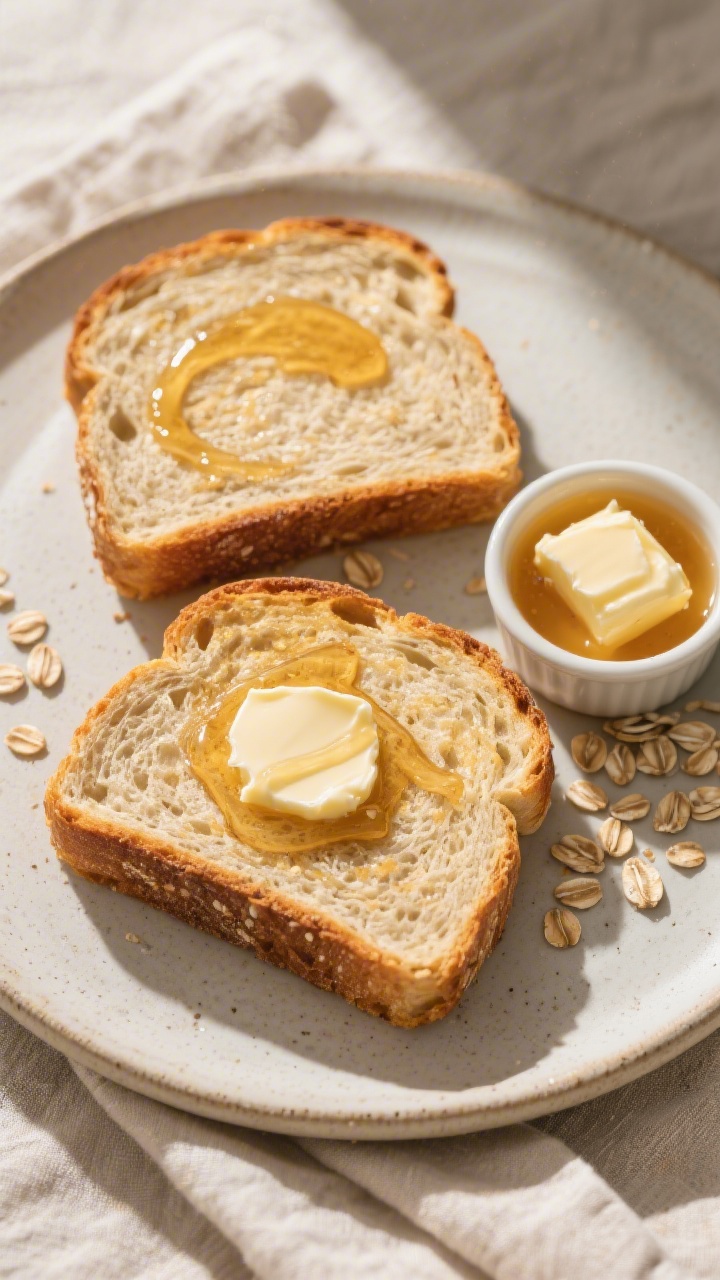
– Oats bring fiber, which supports digestion and helps keep you full. – Honey offers natural sweetness and moisture, so you can keep added sugar low while still enjoying a flavorful loaf. – Balanced energy: Carbs for quick fuel, plus a bit of fat from butter for staying power. – Homemade means control: You skip preservatives and adjust salt or sweetness as you like.
Pitfalls to Watch Out For
– Water too hot kills yeast. Keep liquids warm, not hot—about 105–110°F (40–43°C). – Too much flour makes a dry loaf. The dough should be soft and slightly tacky.
Add flour a tablespoon at a time only if needed. – Under-kneading leads to a dense crumb. Aim for a smooth, stretchy dough that passes a gentle windowpane test. – Rushing the rise flattens flavor. Let the dough double. Temperature and yeast freshness matter. – Overbaking dries the bread. Start checking at 30 minutes and use a thermometer if you have one.
Recipe Variations
– Whole Wheat Honey Oat: Swap 1 cup of bread flour for whole wheat flour. Add 1–2 tablespoons extra milk if the dough feels stiff. – No-Dairy Version: Use warm water or unsweetened oat milk instead of milk, and replace butter with neutral oil. – Seeded Oat Loaf: Add 2 tablespoons each of sunflower seeds and pumpkin seeds to the dough.
Sprinkle a few on top with the oats. – Cinnamon Raisin Oat: Add 1 teaspoon cinnamon and 3/4 cup raisins during the last minute of kneading. Skip the oat topping or keep it for contrast. – Honey Oat Rolls: Portion the dough into 10–12 balls, rise on a sheet pan, and bake 16–20 minutes. Great for sliders or dinner rolls. – Extra-Soft Crust: Tent the loaf with foil for the last 10 minutes of baking and brush with butter after baking.
FAQ
Can I make this without a stand mixer?
Absolutely.
A wooden spoon and your hands work fine. Knead on a lightly floured surface until the dough is smooth and elastic.
What if I only have all-purpose flour?
You can use it. The loaf may be slightly less chewy and may need 1–2 tablespoons less liquid.
Knead well to build structure.
Do quick oats work?
Yes, but the texture will be a bit softer and less nubby. Avoid instant oatmeal packets with flavors or added sugar.
Can I reduce the honey?
Yes. Use 2–3 tablespoons instead of 1/4 cup for a less sweet loaf.
You may need an extra teaspoon or two of liquid to keep the dough soft.
How do I know when the dough has risen enough?
Gently press a fingertip into the dough. If the dent springs back slowly and not completely, it’s ready. If it pops back fast, give it more time.
Why did my loaf sink after baking?
It may have over-proofed or been underbaked.
Next time, bake when the dough rises just above the pan and check for a 195–200°F internal temperature.
Can I use active dry yeast instead of instant?
Yes. Bloom it in warm water with honey first, then proceed. Expect the rise to take a bit longer.
How can I make the crust shinier and softer?
Brush the shaped dough with egg wash before baking and brush the baked loaf with melted butter while warm.
In Conclusion
Honey oat bread is cozy, forgiving, and full of real flavor. It fits weekday breakfasts and weekend baking alike, and it makes the house smell incredible.
With a handful of pantry ingredients and a little patience, you’ll have a golden loaf that slices beautifully and tastes even better. Keep this recipe handy—it’s one you’ll come back to again and again.
Printable Recipe Card
Want just the essential recipe details without scrolling through the article? Get our printable recipe card with just the ingredients and instructions.