Coconut Mango Panna Cotta (No Gelatin If Vegan) – Creamy, Sunny, and Easy

This panna cotta is smooth, tropical, and surprisingly simple. You get lush coconut cream topped with bright mango, and you don’t need fancy tools or pastry skills.
It’s the kind of dessert that looks restaurant-ready but takes less than 20 minutes of hands-on time.
You can make it with gelatin or keep it fully plant-based using agar-agar. Either way, it sets beautifully and tastes like a mini vacation in a glass.
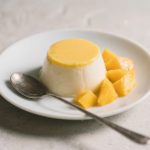
Coconut‑Mango Panna Cotta (No Gelatin If Vegan) – Creamy, Sunny, and Easy
Ingredients
- Full-fat coconut milk or coconut cream (13.5–15 oz can; aim for high-fat for the best texture)
- Granulated sugar or maple syrup (to taste)
- Pure vanilla extract (or vanilla bean paste)
- Pinch of fine sea salt
- Gelatin powder (unflavored) or agar-agar powder (for vegan)
- Ripe mangoes (fresh is best; frozen works)
- Lime (zest and juice, optional but great)
- Water (for blooming gelatin or dissolving agar)
- Optional garnishes: toasted coconut flakes, fresh mint, passion fruit pulp, or a drizzle of honey/maple
Instructions
- Chill your serving dishes. Pop 4 to 6 small ramekins or glasses into the fridge. Cold dishes help the panna cotta set evenly and quickly.
- Prep the mango layer. Peel and dice 2 ripe mangoes. Blend until smooth for a puree, or keep half in small cubes for texture. Add 1–2 teaspoons lime juice and a pinch of salt. Taste and sweeten lightly if needed. Set aside.
- Measure your setting agent. For gelatin: use 2 teaspoons powdered gelatin. For agar-agar powder: use 1 to 1.5 teaspoons for a softly set, creamy finish. Note: Agar sets more firmly than gelatin, so a little goes a long way.
- Bloom or dissolve the setting agent. For gelatin: sprinkle it over 3 tablespoons cold water in a small bowl. Let it sit 5–10 minutes to bloom. For agar: whisk it into 1/3 cup room-temperature water.
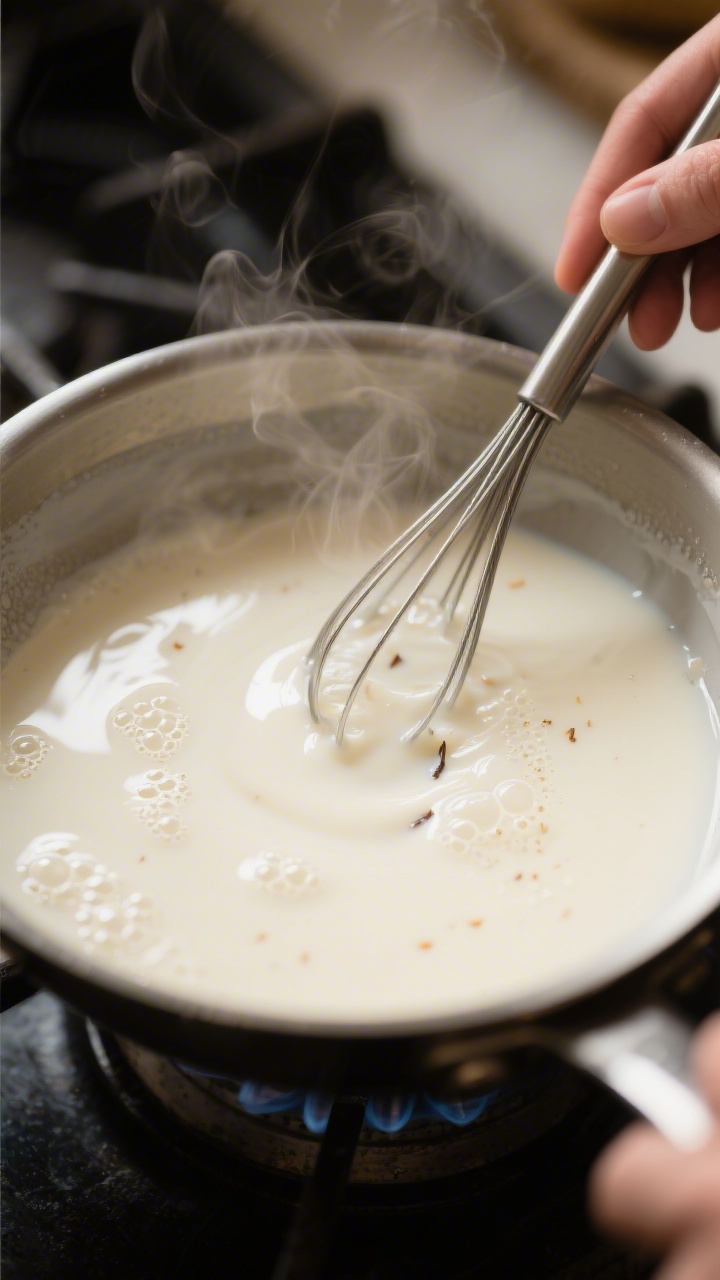
- Warm the coconut base. In a saucepan, combine 1 can (about 14 oz) full-fat coconut milk, 3–4 tablespoons sugar (or 2–3 tablespoons maple syrup), 1 teaspoon vanilla, and a pinch of salt. Heat over medium-low, whisking until the sugar dissolves and the mixture is steaming but not boiling.
- Incorporate the setting agent. For gelatin: remove the coconut mixture from heat. Stir in the bloomed gelatin until fully dissolved. Do not boil. For agar: whisk the agar mixture into the hot coconut mixture and return to a gentle simmer. Cook at a light bubble for 1–2 minutes, whisking often, to fully activate the agar.
- Taste and adjust. Check sweetness and salt. Remember, flavors dull when cold. Add a touch more sugar or a splash of lime juice if you want extra brightness.
- Pour and chill. Divide the coconut mixture among the chilled ramekins or glasses, filling each 2/3 to 3/4 full. Let cool on the counter 10–15 minutes, then refrigerate uncovered until set: about 4 hours for gelatin, 1–2 hours for agar.
- Top with mango. Spoon mango puree over each set panna cotta. Add a few mango cubes for contrast if you like. Chill 20–30 more minutes to lightly set the top layer.
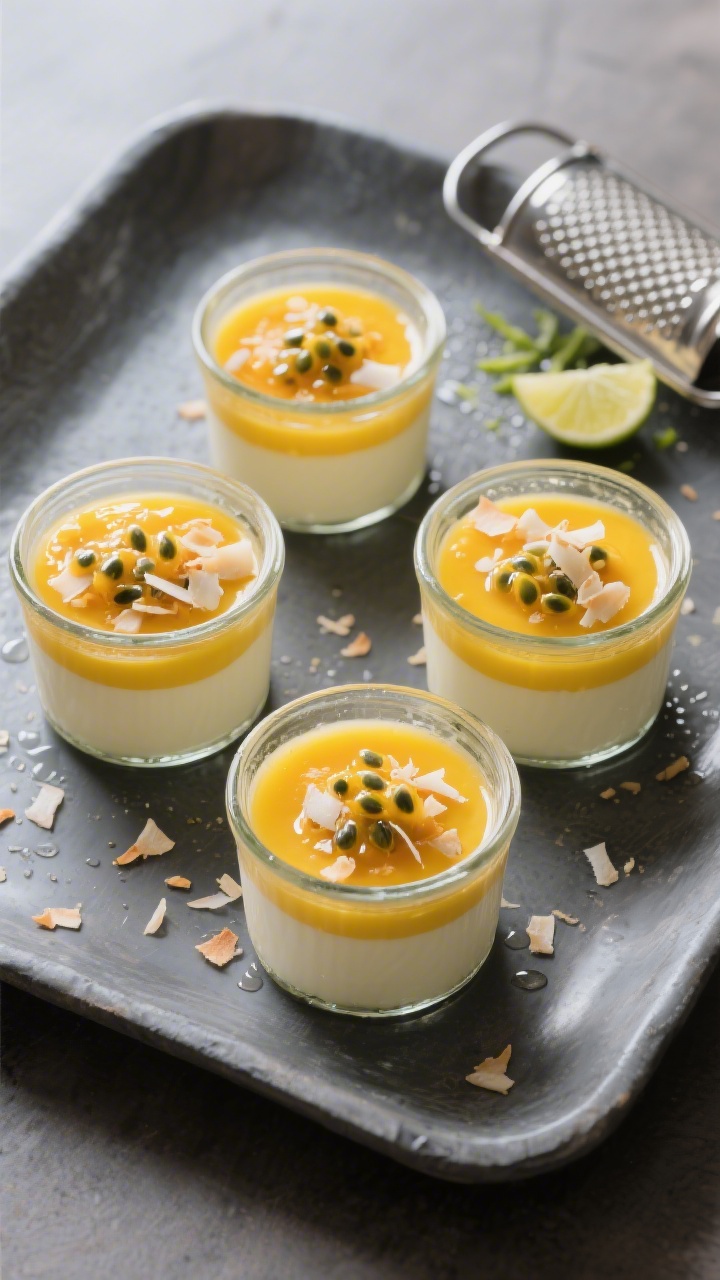
- Garnish and serve. Just before serving, add lime zest, toasted coconut flakes, or mint. If using passion fruit, drizzle a little over the mango for extra tartness and crunch.
What Makes This Recipe So Good
- Flexible for all eaters: Choose gelatin for a classic set or use agar-agar to keep it vegan. Both versions turn out silky and sliceable.
- Big flavor, simple steps: Coconut and mango do the heavy lifting, so you don’t need lots of spices or special ingredients.
- Make-ahead friendly: Sets in the fridge and holds well for days.
Perfect for dinner parties or meal-prep treats.
- Light yet satisfying: Creamy texture without feeling heavy, thanks to the fruit-forward topping.
- Easy to customize: Adjust sweetness, add lime zest, or swirl in passion fruit. It’s a great base recipe.
Shopping List
- Full-fat coconut milk or coconut cream (13.5–15 oz can; aim for high-fat for the best texture)
- Granulated sugar or maple syrup (to taste)
- Pure vanilla extract (or vanilla bean paste)
- Pinch of fine sea salt
- Gelatin powder (unflavored) or agar-agar powder (for vegan)
- Ripe mangoes (fresh is best; frozen works)
- Lime (zest and juice, optional but great)
- Water (for blooming gelatin or dissolving agar)
- Optional garnishes: toasted coconut flakes, fresh mint, passion fruit pulp, or a drizzle of honey/maple
Step-by-Step Instructions
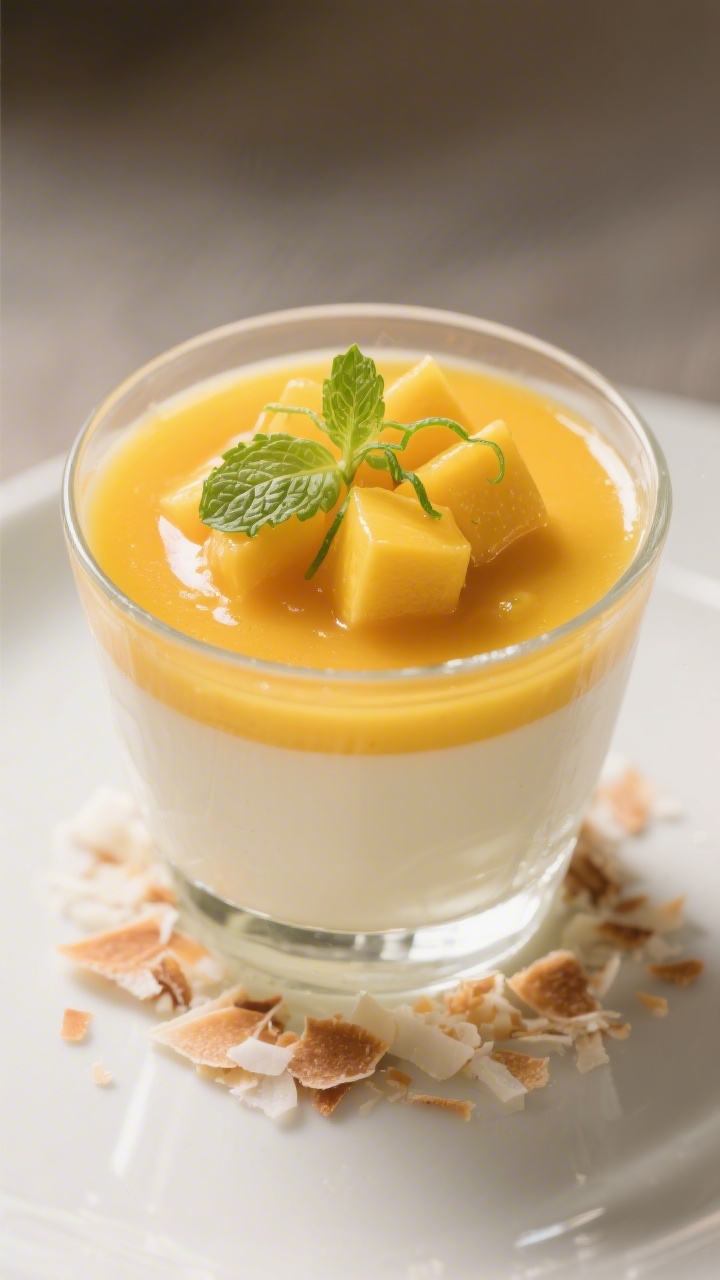
- Chill your serving dishes. Pop 4 to 6 small ramekins or glasses into the fridge. Cold dishes help the panna cotta set evenly and quickly.
- Prep the mango layer. Peel and dice 2 ripe mangoes.
Blend until smooth for a puree, or keep half in small cubes for texture. Add 1–2 teaspoons lime juice and a pinch of salt. Taste and sweeten lightly if needed.
Set aside. - Measure your setting agent. For gelatin: use 2 teaspoons powdered gelatin. For agar-agar powder: use 1 to 1.5 teaspoons for a softly set, creamy finish. Note: Agar sets more firmly than gelatin, so a little goes a long way.
- Bloom or dissolve the setting agent. For gelatin: sprinkle it over 3 tablespoons cold water in a small bowl.
Let it sit 5–10 minutes to bloom. For agar: whisk it into 1/3 cup room-temperature water.
- Warm the coconut base. In a saucepan, combine 1 can (about 14 oz) full-fat coconut milk, 3–4 tablespoons sugar (or 2–3 tablespoons maple syrup), 1 teaspoon vanilla, and a pinch of salt. Heat over medium-low, whisking until the sugar dissolves and the mixture is steaming but not boiling.
- Incorporate the setting agent. For gelatin: remove the coconut mixture from heat.
Stir in the bloomed gelatin until fully dissolved. Do not boil. For agar: whisk the agar mixture into the hot coconut mixture and return to a gentle simmer.
Cook at a light bubble for 1–2 minutes, whisking often, to fully activate the agar. - Taste and adjust. Check sweetness and salt. Remember, flavors dull when cold. Add a touch more sugar or a splash of lime juice if you want extra brightness.
- Pour and chill. Divide the coconut mixture among the chilled ramekins or glasses, filling each 2/3 to 3/4 full.
Let cool on the counter 10–15 minutes, then refrigerate uncovered until set: about 4 hours for gelatin, 1–2 hours for agar.
- Top with mango. Spoon mango puree over each set panna cotta. Add a few mango cubes for contrast if you like. Chill 20–30 more minutes to lightly set the top layer.
- Garnish and serve. Just before serving, add lime zest, toasted coconut flakes, or mint.
If using passion fruit, drizzle a little over the mango for extra tartness and crunch.
Storage Instructions
- Refrigerate covered for up to 4 days. Keep the mango layer on top to prevent drying.
- Do not freeze, as freezing can split the coconut and change the texture.
- Cover tightly to prevent fridge odors from seeping in. A layer of plastic wrap pressed gently on the surface helps avoid condensation.
- Make ahead: You can prepare the coconut base a day early, then add the mango layer the day you plan to serve.
Benefits of This Recipe
- Plant-based option: The agar version is fully vegan and dairy-free, yet still creamy and indulgent.
- Naturally gluten-free: Safe for most gluten-sensitive guests without extra swaps.
- Lower effort, high reward: Minimal cooking time and no oven required.
- Nutrient boost from mango: Mango brings vitamin C, fiber, and natural sweetness, which can reduce the need for added sugar.
- Flexible sweetness: Easily adjust to your taste or use unrefined sweeteners like maple syrup.
Common Mistakes to Avoid
- Overheating gelatin: Boiling can damage gelatin’s setting power.
Stir it into warm (not boiling) coconut and mix gently until dissolved.
- Undercooking agar: Agar must simmer briefly to activate. If you skip this, the panna cotta won’t set properly.
- Using light coconut milk: Low-fat coconut can make the texture thin and icy. Choose full-fat for a silky set.
- Adding acidic juice too early: Too much acid in the base can interfere with setting.
Keep lime juice to the mango layer or add just a splash after the base has come off heat.
- Rushing the chill time: If it hasn’t fully set, the mango layer can sink. Let the base firm up before topping.
Alternatives
- Dairy variation: Blend half coconut milk with heavy cream or whole milk for a milder coconut flavor.
- Sugar swaps: Use honey (not vegan), maple syrup, or coconut sugar. Start with less, then taste and adjust.
- Fruit toppers: Try passion fruit, pineapple, raspberry coulis, or a mixed tropical salsa with kiwi and papaya.
- Flavor twists: Infuse the coconut base with crushed cardamom pods, fresh ginger slices, or a strip of lime zest.
Strain before pouring.
- Textural add-ins: Add a thin crunch layer at the bottom: toasted coconut mixed with a little maple syrup, pressed lightly into the dish before pouring the base.
FAQ
Can I unmold the panna cotta or should I serve it in the glass?
Serving in the glass is easiest. If you want to unmold, lightly oil the ramekins before pouring, then dip the sides briefly in warm water and run a thin knife around the edge. Agar unmolds more cleanly than gelatin, which tends to be softer.
How firm should the final texture be?
Aim for a gentle wobble that holds its shape.
Gelatin gives a softer, more custard-like set; agar is a bit firmer and cleaner-cut. If you prefer extra soft, reduce gelatin to 1.5 teaspoons or agar to 3/4 to 1 teaspoon.
Can I use frozen mango?
Yes. Thaw fully and drain excess liquid before blending.
You may need a touch more sweetener or a squeeze of lime to brighten the flavor.
What if my panna cotta didn’t set?
For gelatin, it may have overheated or not bloomed long enough. For agar, it likely didn’t simmer long enough. You can gently rewarm the mixture, add a small additional amount of the setting agent, and pour into clean dishes to reset.
How do I avoid coconut fat separation?
Use well-shaken full-fat coconut milk and keep the heat low and steady.
Avoid boiling hard. Whisk continuously until smooth, and chill promptly after pouring.
Is this recipe sweet enough for kids?
Usually yes, but taste as you go. Mango sweetness varies widely.
Start modest with sugar, then adjust after tasting the warm base and the mango puree.
Wrapping Up
This coconut‑mango panna cotta keeps things simple while delivering a silky, tropical finish to any meal.
Whether you choose gelatin or agar, you’ll get a reliable set and clean flavors that highlight ripe mango and creamy coconut.
Make it ahead, garnish simply, and enjoy a dessert that feels special without the stress.
It’s a small effort with a sunny payoff—every time.
Printable Recipe Card
Want just the essential recipe details without scrolling through the article? Get our printable recipe card with just the ingredients and instructions.