
How To Tell If Cheddar Cheese Has Gone Bad?

Cheddar cheese is a wonderful ingredient that can be eaten raw and is utilized in a variety of recipes. Most of you buy big quantities of cheddar cheese without realizing that it has a shelf life and can go bad even in the fridge.
How To Tell If Cheddar Cheese Has Gone Bad?
The texture, smell, appearance, and flavor of your cheddar cheese are the most obvious symptoms that it is stale. When cheese is kept in the fridge for an extended period of time, it darkens in color, becomes hard, develops a strong, pungent odor, becomes outrageously sticky, and mold begins to grow in it.
All of these indicators indicate that your cheese has gone bad, and you should throw it immediately. To avoid problems, it is usually a good idea to verify the shelf life of cheddar cheese and its expiration date before using it.
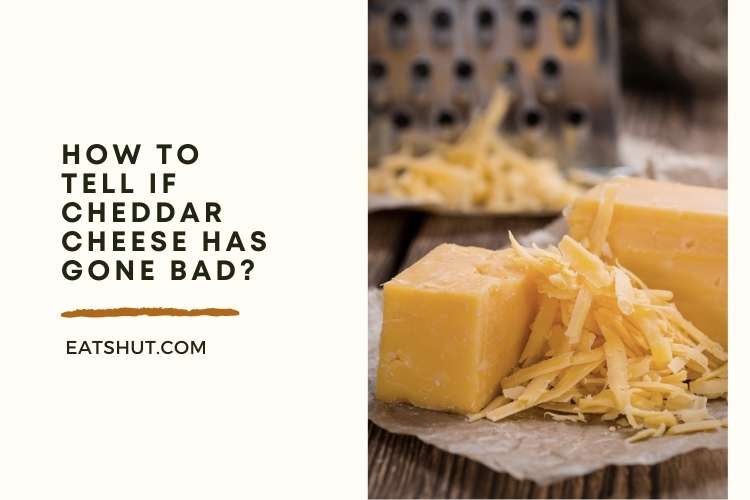
If you’ve had your cheddar cheese in the fridge for a long time and aren’t sure whether you should use it, keep reading.
In this guide, we’ll explain how to tell if cheddar cheese has gone bad, and all of the relevant information on the subject.
How Do I Know If My Cheddar Cheese Has Gone Bad?
Because cheddar cheese is a dairy product, it has a significant risk of spoiling, and the indications are clear. The stale cheddar cheese’s visual appearance, odor, and flavor are all indicators.
The following symptoms are clear signals that your cheddar cheese has gone stale, so keep an eye out for them and throw it immediately if you see any of them.
Appearance
If your cheese has gone bad, first physically inspect it for mold. If you detect a chunk of cheese growing mold, do not throw it away; simply chop it and use it.
But, if the entire block of cheese is covered in a thick film of white mold, it should be discarded. A dark color look on your cheese is also a sign that it is going bad.
Odor
Cheese has a distinct odor that appears off even when it is fresh, but if you suspect it is stale, give it a whiff. If the scent is really awful and pungent, it signals that your cheese has gone bad.
Taste
The flavor of old cheese is another indicator. If you’re not sure about your cheese, try a piece. Likewise, if the flavor is sour and strange, your cheese is spoiled. If all of the aforementioned symptoms arise at the same time, you should throw out your cheddar cheese.
Does Cheddar Cheese Really Expire?
Every product has a shelf life after which it can go bad or expire. Similarly, because cheddar cheese is a dairy product, it expires over time owing to aging and other factors.
As you open your cheese, spores from the environment contaminate it, and as time passes, mold begins to grow in it, and it gets stale when its expiration date arrives.
What Happens If You Eat Bad Cheddar Cheese?
The health impact of cheese is determined by how bad it has gotten and how much hazardous mold has grown on it.
If you consume rotten cheddar cheese that hasn’t expired for a long time, you’ll get food poisoning, which includes stomach aches, vomiting, diarrhea, and other mild symptoms.
Allergic reactions, such as foodborne infections, may develop in a moderate instance. Respiratory problems are also possible.
Hazardous molds can develop mycotoxins, which cause cancer, cause acute food poisoning, require dialysis, and even cause death.
How Long Does Cheddar Cheese Last in the Fridge?
There are various cheese brands, and each one has an extended shelf life thanks to preservatives. In general, if your cheese is properly opened and stored, it will last for four to five weeks or longer, depending on storage and quality in your refrigerators.
Cheese’s shelf life normally decreases once it has been opened owing to exposure to air and contamination from its surroundings.
How Long Can Unopened Cheddar Cheese Last in the Fridge?
An unopened block of cheese will stay longer in its original packaging, so try not to open it until you’re ready to consume it, as opening the packaging will diminish its shelf-life.
But, if an unopened block of cheddar cheese is kept in the fridge without any exposure to air, it will readily last for 5-6 months without mold development or going stale. This time may differ for other brands because it is only a guideline.
What Does Cheddar Cheese Mold Look Like?
As different varieties of mold develop on your cheese, the mold that grows on it varies in color and look. The mold that typically grows on cheddar cheese is a thick white covering that is mostly calcium from age.
Because it’s natural, you can cut that section with white mold and use the rest. Green, ashy, and blue mold with a bubbly feel is another sort of mold.
Why Does Cheddar Cheese Mold In The Refrigerator?
A mold is a form of fungi, and fungal spores from your hand or surroundings can adhere to your cheese. Mold grows best in warm, humid environments, so when you store spore-contaminated cheese in the fridge, a moisture film forms on the cheese.
The mold layer on your cheese grows as a result of the moisture and spores. In time, you will notice green, white, or blue mold growing in your cheese, even if it is stored in the fridge.
Care Tips To Keep Cheddar Cheese Longer
If you are a cheese fan and purchase huge quantities of cheese, you may not know how to properly store them to extend their usage and shelf-life. Use the methods below to make your cheese last longer than usual.
- Never wrap your cheese in plastic because the fats and oils lead the cheese to absorb the plastic flavor, destroying its natural flavor.
- Avoid tightly wrapping cheese because the ammonia odor is released, and if there is no room for the cheese to breathe, the pungent stench will remain inside. Additionally, don’t wrap the cheese too loosely, as this can cause it to dry out due to air exposure.
- To keep your cheese, use cheese bags, cheese paper, wax, or parchment paper, which allow it to breathe and prevent air exposure.
- Refrigerate or freeze your cheese to keep it fresh for a long period and to increase its shelf life.
- Keep your cheese in the vegetable drawer, which has a moderate temperature that is neither too cold nor too hot, making it excellent for cheese.
Conclusion
In the end, to know if your cheddar cheese has gone bad, you should look for the color, flavor, and smell of cheddar cheese.
Mold growth in cheese can be caused by air exposure and bacterial attack, leading to its expiry. Cheese must be stored properly to extend its shelf life.