
Can I Use Swiss Instead Of Mozzarella?

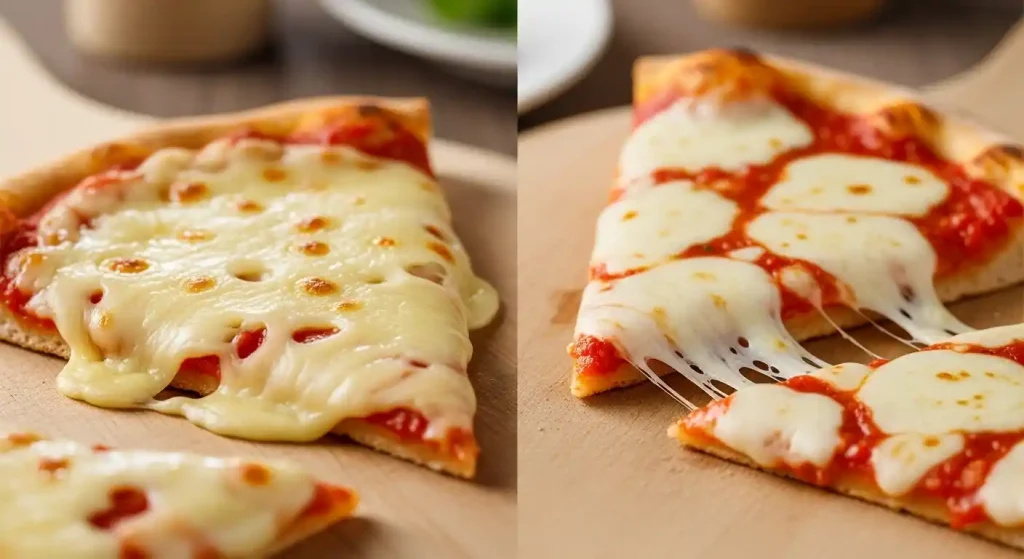
You’re definitely familiar with mozzarella cheese if you enjoy Italian food. It’s a mellow, soft cheese that’s frequently used in recipes like Caprese salad, pizza, and lasagna.
A soft, white cheese created from cow’s milk is called mozzarella. It is smooth and creamy in texture and has a moderate, slightly acidic flavor. It is frequently used in Italian foods including caprese salad, pizza, and lasagna.
Mozzarella is a favorite cheese for grilling as well since it melts quickly and has a stringy, gooey texture.
Conversely, Swiss cheese is a hard cheese manufactured from cow’s milk. It has a strong, dense texture and a nutty, somewhat sweet flavor.
Sandwiches, quiches, and fondue are just a few foods that frequently feature Swiss cheese. It goes well with crackers and fruit, making it a favorite cheese for snacking.
| Cheese | Flavor | Texture | Melting Point | Ideal Use |
|---|---|---|---|---|
| Swiss | Nutty, Mild | Firm, Slightly Gritty | 160°F (71°C) | Sandwiches, Burgers, Fondue |
| Mozzarella | Mild, Creamy | Soft, Stretchy | 138°F (59°C) | Pizza, Lasagna, Caprese Salad |
So, is Swiss cheese an acceptable substitute for mozzarella? There is a simple answer: yes, you can. There are a few things to keep in mind, though.
First off, Swiss cheese has a more robust flavor than Mozzarella, making it less suitable for recipes where the cheese is the main attraction. Second, Swiss cheese may not work as well in meals like pizza or lasagna as Mozzarella since it doesn’t melt as easily.
As you can see, each cheese has advantages and disadvantages. Mozzarella is generally a better option if you create a dish like a Caprese salad where the cheese is the main attraction. However, Swiss cheese can work just as well if you’re creating a sandwich or quiche when the cheese is simply one of the ingredients.
The Cheese Dilemma: When Substitutions Sound Easier Than They Taste
So, you’re halfway through your recipe, open the fridge, and—bam!—no mozzarella in sight. The only cheese sitting there? Swiss.
It’s tempting to swap them, but before you start sprinkling slices over pizza or lasagna, let’s talk about what really happens when you do.
Both are mild and creamy, but they behave very differently when heat, fat, and flavor come into play.
Understanding What Makes Each Cheese Tick
Mozzarella is all about stretch and melt. That ooey-gooey pull you see on pizza commercials? That’s thanks to its high moisture and low aging time.
Swiss, on the other hand, is firmer, nuttier, and made to hold its shape. It melts, yes, but not in the same silky way. You’ll get more of a buttery melt than a stringy stretch.Kn
owing this difference helps you tweak your recipe to get close to mozzarella’s signature melt without ending up with oily clumps or bland flavor.
Melting Behavior: The Real Game Changer
Swiss cheese melts best under lower, slower heat. Mozzarella loves quick, high heat.
If you’re replacing mozzarella with Swiss in, say, pizza or baked pasta, reduce the oven temperature slightly and give it more time.
You might not get the same Instagram-worthy cheese pull, but you’ll still get a creamy, cohesive layer—especially if you shred Swiss finely and let it sit at room temperature before baking.
Quick Kitchen Tweaks to Get a “Mozzarella-Like” Result
To mimic mozzarella’s texture, try mixing Swiss with a touch of cream cheese or a splash of milk before melting.
For flavor, balance Swiss’s nuttiness with something lighter, like a sprinkle of Parmesan or a few slices of provolone.
And if you’re making grilled cheese or quesadillas, butter the bread well—Swiss browns beautifully but dries out faster than mozzarella.
Pro Tips for Cheese Swapping That Actually Works
- Room Temperature Rule: Let Swiss come to room temp before baking. Cold cheese resists melting evenly.
- Shred It Yourself: Pre-shredded cheese has anti-caking agents that ruin smooth melts.
- Mind the Salt: Swiss is often milder; you might need a pinch more salt for balance.
- Try Blends: Half Swiss + half mild provolone = a surprisingly close mozzarella mimic.
Cheese Swap Etiquette: Do’s and Don’ts
Do:
- Use Swiss in dishes that don’t rely solely on stretch (like casseroles, sandwiches, and omelets).
- Combine Swiss with softer cheeses for better texture.
- Adjust your baking time and temperature.
Don’t:
- Expect identical flavor or stretchiness.
- Use aged Swiss—it becomes too dry and sharp.
- Add it straight from the fridge—it’ll clump instead of melt.
Is It Possible to Use Swiss Cheese for Mozzarella on Pizza?
Swiss cheese can be used in place of mozzarella cheese in pizza, however, the flavor and texture may differ.
The firm and slightly gritty texture of Swiss cheese might not offer the same melting and stretchy quality as mozzarella cheese.
Does Swiss Cheese Melt Well?
Swiss cheese melts well, but because it has a greater melting point than mozzarella cheese, it could take longer to melt and might not have the same elastic, gooey consistency as mozzarella cheese.
What Kind of Cheese Compares to Mozzarella?
Provolone cheese has a flavor and texture that are comparable to mozzarella.
The flavor of provolone cheese is mild and just a little bit sweet, and it melts easily.
It is an excellent substitute for mozzarella cheese because it is frequently used in sandwiches, pizzas, and Italian meals.
Can I Use Swiss Cheese in Lasagna Instead of Mozzarella?
Swiss cheese can be used in place of mozzarella cheese in lasagna, but the flavor and texture may differ.
Swiss cheese’s solid texture may not deliver the same sensation as mozzarella’s soft and flexible texture when it comes to melting in lasagna.
However, Swiss cheese can be a good replacement if you like a harder texture in your lasagna.
How Is Fondue Made Using Cheese?
A variety of cheeses, including Gruyere, Emmental, and Swiss cheese, are frequently used to make fondue.
These cheeses blend to produce a savory fondue that is ideal for dipping meats, veggies, and bread.
How Nutritious Is Swiss Cheese?
Swiss cheese is a nutritious addition to your diet because it is a rich source of calcium, protein, and vitamin D.
Swiss cheese, like all cheeses, is high in fat and calories, so it should only be eaten seldom. To cut back on overall calories, choose low-fat or reduced-fat Swiss cheese.
Wrapping It Up: The Smart Way to Cheat on Mozzarella
Yes, you can use Swiss instead of mozzarella—but with awareness and adjustments.
It’s not a perfect twin, but if you tweak the heat, moisture, and balance, your dish can still be drool-worthy.
Think of Swiss as mozzarella’s sophisticated cousin—less stretchy, more flavorful, but just as lovable in the right recipe.
FAQs: Your Last-Minute Cheese Confusion, Solved
Q1: Can I use Swiss instead of mozzarella in pizza?
You can, but expect a softer melt and less stretch. For a closer texture, mix Swiss with provolone or a small amount of low-moisture mozzarella.
Q2: Does Swiss melt better than mozzarella?
Not exactly. Swiss melts slower and creamier, while mozzarella melts quickly and becomes stringy.
Q3: Is Swiss cheese healthier than mozzarella?
They’re close in calories, but Swiss often has slightly more protein and calcium. Mozzarella, however, is usually lower in sodium.
Q4: Can I use Swiss in lasagna or baked pasta?
Yes—but blend it with ricotta or a mild cheddar for smoother layering. It’ll hold up well in the oven without turning rubbery.
Q5: What’s the best Swiss alternative if I don’t want that nutty flavor?
Go for Monterey Jack, provolone, or white cheddar—they’ll give you the creamy melt with a neutral taste.