Baked Salmon With Dill and Roasted Potatoes – A Bright, Weeknight-Friendly Favorite

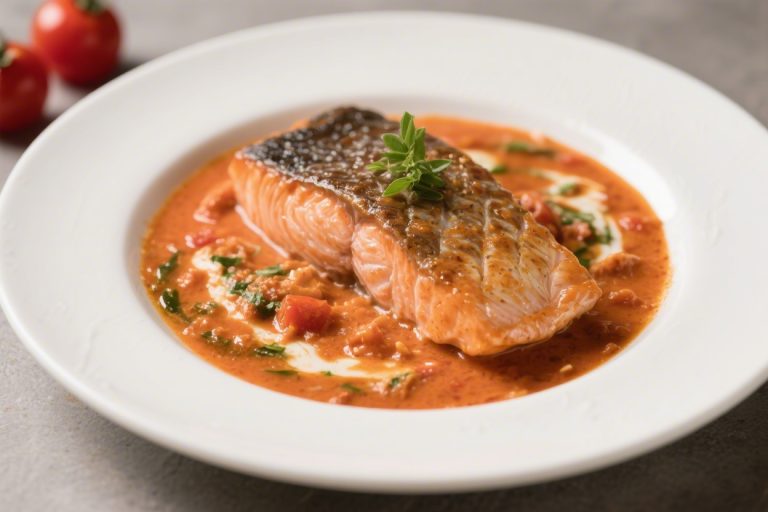
Fresh salmon, a handful of dill, and crisp roasted potatoes make a dinner that feels special without much fuss. This is the kind of recipe you can pull off on a busy evening and still sit down to something that tastes thoughtful. The flavors are clean and bright: lemony dill, buttery salmon, and potatoes with golden edges.
The best part is that it all cooks in the oven, so you can tidy up or relax while it roasts. If you’re new to cooking salmon, this is a forgiving place to start.
Baked Salmon With Dill and Roasted Potatoes - A Bright, Weeknight-Friendly Favorite
Ingredients
- 1.5 pounds small potatoes (Yukon gold or baby reds), cut into 1-inch pieces
- 1.25 to 1.5 pounds salmon fillet (skin-on preferred), cut into 4 portions
- 1 small bunch fresh dill, finely chopped (about 1/3 cup loosely packed)
- 1 large lemon (zest and juice)
- 3 tablespoons olive oil, divided
- 2 tablespoons unsalted butter, melted (optional but recommended)
- 2 to 3 garlic cloves, minced
- 1 teaspoon Dijon mustard
- 1 teaspoon honey or maple syrup (optional, for balance)
- 1 teaspoon kosher salt, plus more to taste
- 1/2 teaspoon freshly ground black pepper
- 1/2 teaspoon smoked paprika or sweet paprika (optional, for the potatoes)
- Red pepper flakes (optional, a pinch for heat)
Instructions
- Heat the oven: Set to 425°F (220°C). Line a large sheet pan with parchment for easy cleanup, or lightly oil it.
- Prep the potatoes: Toss potatoes with 2 tablespoons olive oil, 1/2 teaspoon salt, 1/4 teaspoon pepper, and paprika if using. Spread in a single layer on the pan.
- Start roasting: Roast potatoes for 18–20 minutes, flipping once halfway, until the edges start to brown but centers are not fully tender.
- Make the dill mixture: In a small bowl, combine chopped dill, lemon zest, 1 tablespoon lemon juice, melted butter, remaining 1 tablespoon olive oil, Dijon, garlic, and honey if using. Season with a pinch of salt and pepper. It should taste bright and savory.
- Season the salmon: Pat salmon dry. Sprinkle lightly with salt and pepper on both sides. If the fillet is one large piece, cut into four portions for even cooking.
- Create space on the pan: Pull the potatoes from the oven. Push them to the edges to make room down the center.
- Add the salmon: Place salmon skin-side down in the center. Spoon half of the dill mixture over the salmon. Toss the potatoes with the remaining dill mixture on the pan to coat.
- Roast to finish: Return the pan to the oven for 8–12 minutes, depending on thickness. Salmon is done when it flakes easily and the thickest part registers 125–130°F for medium. Potatoes should be crisp at the edges and fork-tender.
- Rest and brighten: Let the salmon rest 3 minutes. Squeeze a little more lemon over everything and add a few fresh dill fronds if you like.
- Serve: Plate salmon with a generous scoop of potatoes. Spoon any pan juices over the top for extra flavor.
What Makes This Recipe So Good
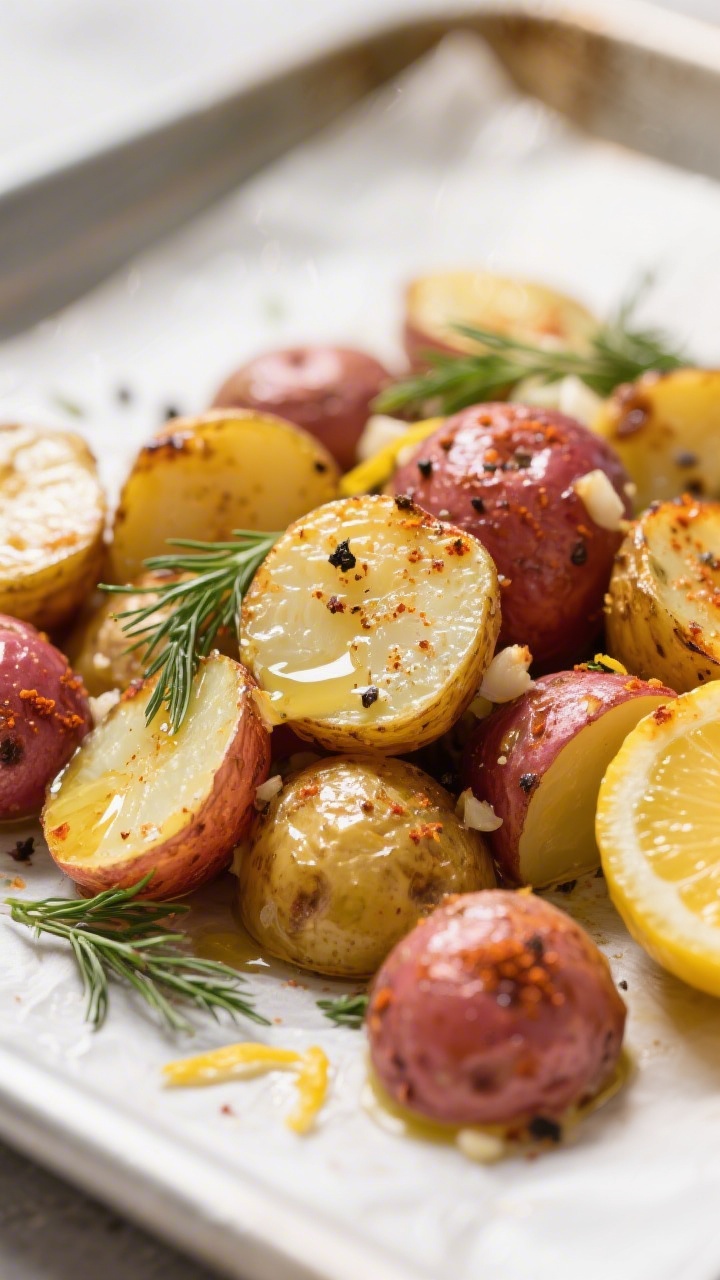
This meal hits that sweet spot of simple and satisfying. You season the potatoes first, get them started, then slide in the salmon so everything finishes together.
The dill-and-lemon mixture keeps the salmon moist and fragrant, and the pan does most of the work.
- Balanced flavors: Fresh dill and lemon brighten rich salmon and earthy potatoes.
- Minimal prep: A few pantry staples and 15 minutes of hands-on time.
- Reliable results: Roasting gives crisp potatoes and tender, flaky salmon.
- Weeknight-friendly: From chopping board to table in about 40 minutes.
- Nutritious: Protein, healthy fats, and fiber in one sheet pan.
Shopping List
- 1.5 pounds small potatoes (Yukon gold or baby reds), cut into 1-inch pieces
- 1.25 to 1.5 pounds salmon fillet (skin-on preferred), cut into 4 portions
- 1 small bunch fresh dill, finely chopped (about 1/3 cup loosely packed)
- 1 large lemon (zest and juice)
- 3 tablespoons olive oil, divided
- 2 tablespoons unsalted butter, melted (optional but recommended)
- 2 to 3 garlic cloves, minced
- 1 teaspoon Dijon mustard
- 1 teaspoon honey or maple syrup (optional, for balance)
- 1 teaspoon kosher salt, plus more to taste
- 1/2 teaspoon freshly ground black pepper
- 1/2 teaspoon smoked paprika or sweet paprika (optional, for the potatoes)
- Red pepper flakes (optional, a pinch for heat)
Instructions
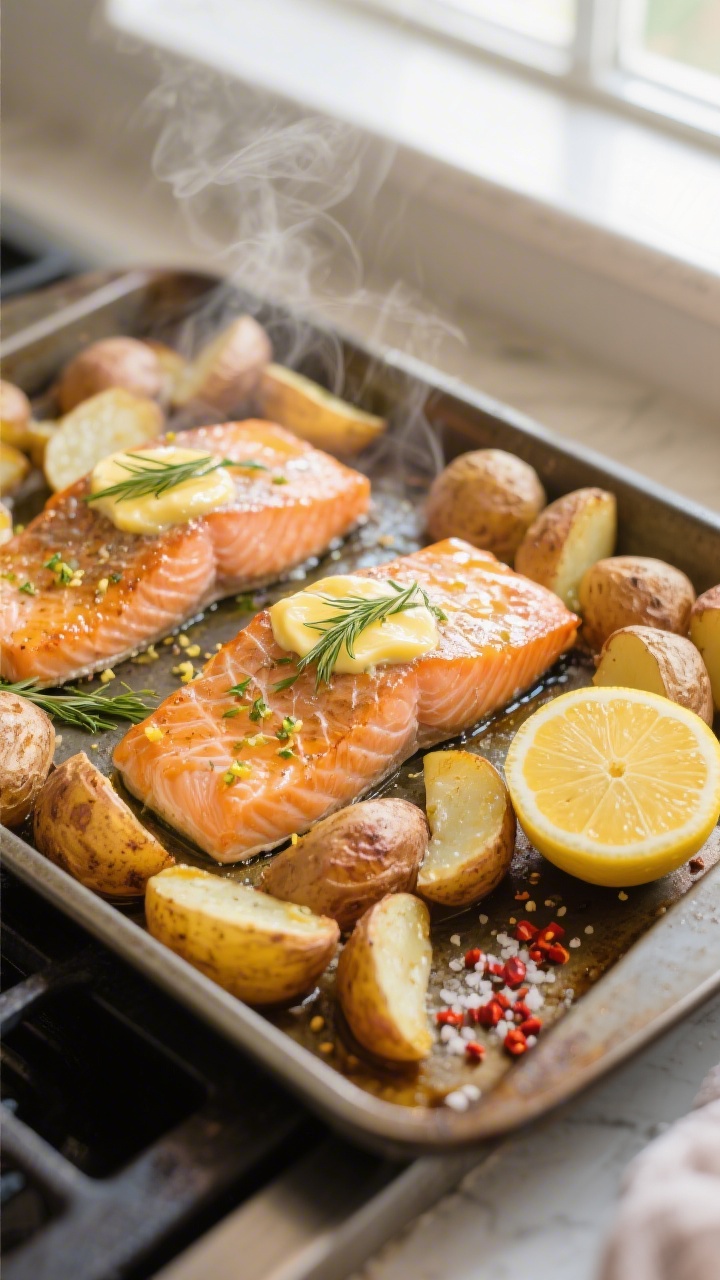
- Heat the oven: Set to 425°F (220°C). Line a large sheet pan with parchment for easy cleanup, or lightly oil it.
- Prep the potatoes: Toss potatoes with 2 tablespoons olive oil, 1/2 teaspoon salt, 1/4 teaspoon pepper, and paprika if using. Spread in a single layer on the pan.
- Start roasting: Roast potatoes for 18–20 minutes, flipping once halfway, until the edges start to brown but centers are not fully tender.
- Make the dill mixture: In a small bowl, combine chopped dill, lemon zest, 1 tablespoon lemon juice, melted butter, remaining 1 tablespoon olive oil, Dijon, garlic, and honey if using.Season with a pinch of salt and pepper. It should taste bright and savory.
- Season the salmon: Pat salmon dry. Sprinkle lightly with salt and pepper on both sides.If the fillet is one large piece, cut into four portions for even cooking.
- Create space on the pan: Pull the potatoes from the oven. Push them to the edges to make room down the center.
- Add the salmon: Place salmon skin-side down in the center. Spoon half of the dill mixture over the salmon.Toss the potatoes with the remaining dill mixture on the pan to coat.
- Roast to finish: Return the pan to the oven for 8–12 minutes, depending on thickness. Salmon is done when it flakes easily and the thickest part registers 125–130°F for medium. Potatoes should be crisp at the edges and fork-tender.
- Rest and brighten: Let the salmon rest 3 minutes.Squeeze a little more lemon over everything and add a few fresh dill fronds if you like.
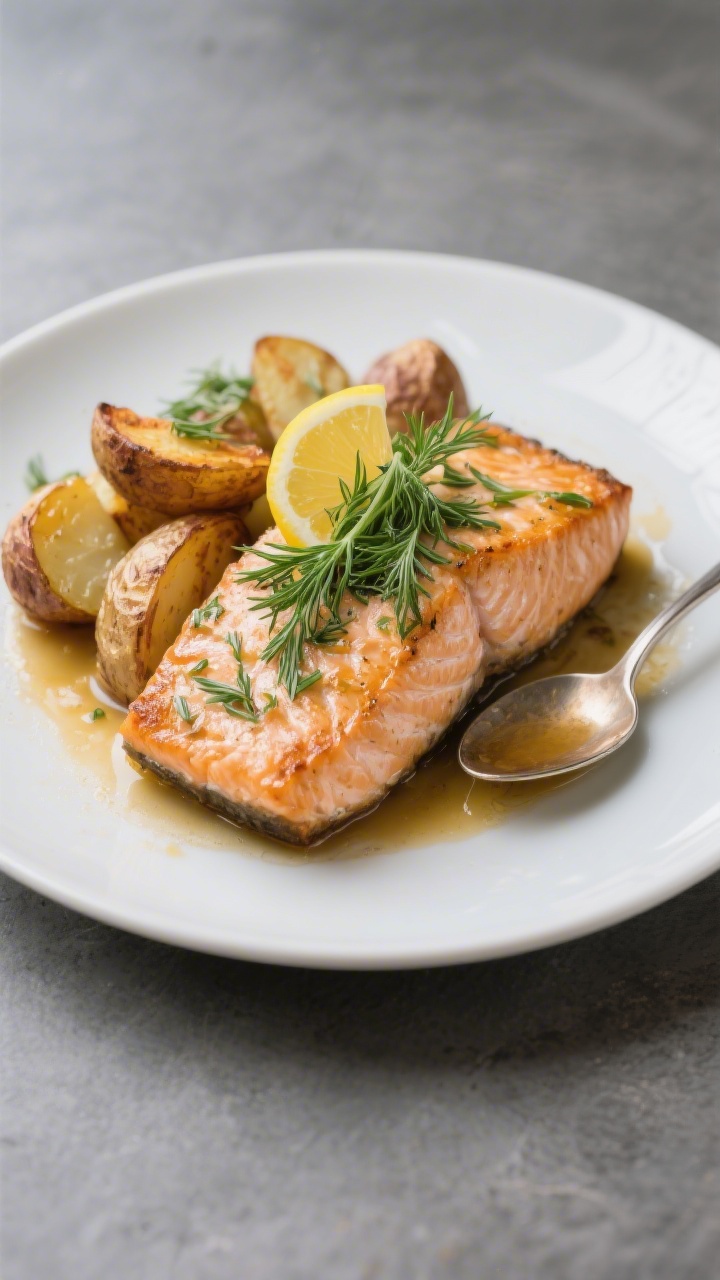
- Serve: Plate salmon with a generous scoop of potatoes. Spoon any pan juices over the top for extra flavor.
Keeping It Fresh
Store leftovers in an airtight container in the fridge for up to 2 days. Keep the salmon and potatoes in separate containers if possible.
This helps the potatoes stay a bit crisper and prevents the salmon from picking up too much starch.
To reheat, use a 300°F oven for 8–10 minutes until warm. Avoid the microwave if you can—it can overcook salmon. If you must, use short bursts and low power.
Cold leftover salmon also makes a great salad topping with lemon, olive oil, and fresh greens.
Benefits of This Recipe
- Heart-healthy fats: Salmon provides omega-3s that support brain and heart health.
- Simple ingredients: No specialty items required, and most ingredients are pantry staples.
- Sheet-pan efficiency: Less cleanup, fewer dishes, and a quicker path to the table.
- Family-friendly: Mild flavors that suit a range of tastes, with optional heat for spice lovers.
- Customizable: Swap herbs, add vegetables, or adjust seasoning without breaking the method.
What Not to Do
- Don’t overcrowd the pan: Crowding traps steam and prevents browning. Use two pans if needed.
- Don’t skip patting the salmon dry: Moisture on the surface stops it from roasting properly and dilutes seasoning.
- Don’t overcook the fish: Pull it when it’s just opaque and flaky. Residual heat will carry it to perfect doneness.
- Don’t add the salmon too early: Give the potatoes a head start so both are done at the same time.
- Don’t drown it in lemon juice before baking: A little is great, but too much acid can make the texture mealy.Save extra lemon for serving.
Variations You Can Try
- Herb swap: Use parsley, chives, or tarragon instead of dill. A blend is lovely too.
- Spice it up: Add a pinch of cayenne to the potatoes, or dust the salmon with Aleppo pepper.
- Garlic-parmesan potatoes: In the last 5 minutes, toss potatoes with 2 tablespoons grated Parmesan and a bit more garlic.
- Veggie boost: Add asparagus, green beans, or broccoli florets for the final 10–12 minutes of roasting.
- Maple-mustard glaze: Mix 1 tablespoon maple syrup with 1 tablespoon Dijon and brush on the salmon in place of the dill mixture. Finish with fresh dill after baking.
- Citrus twist: Swap lemon for orange zest and juice for a rounder, slightly sweeter profile.
- Skin-on crisp: For crispier skin, preheat the pan and place salmon on the hot surface.Serve skin-side up.
FAQ
Can I use frozen salmon?
Yes. Thaw it in the fridge overnight, then pat very dry before seasoning. Frozen salmon can release more moisture, so drying well and roasting at high heat are key.
What kind of potatoes work best?
Yukon gold or baby red potatoes hold their shape and brown nicely.
Russets also work but may crumble a bit. Cut everything to similar size for even cooking.
How do I know when the salmon is done?
Look for opaque, juicy flakes and an internal temperature around 125–130°F in the thickest part for medium. If you prefer more done, go to 135°F, but avoid going higher to keep it tender.
Can I cook the salmon and potatoes on separate pans?
Absolutely.
Use two pans if you want extra-crisp potatoes or if you’re cooking a larger batch. Rotate the pans halfway through and finish the salmon in the final 8–12 minutes.
What can I serve with it?
A simple green salad, steamed asparagus, or sautéed spinach pairs well. A dollop of Greek yogurt mixed with lemon and dill makes a quick sauce if you want something creamy.
Is there a dairy-free option?
Yes.
Skip the butter and use all olive oil. The flavor will still be bright, and the texture of the salmon will be soft and moist.
Can I grill instead of bake?
Yes. Place the salmon skin-side down on a clean, oiled grill over medium heat for 6–10 minutes, depending on thickness.
Roast the potatoes in the oven as directed, or use a grill basket.
How should I season if I don’t have fresh dill?
Use 1 to 1.5 teaspoons dried dill in the mixture and add fresh parsley or chives if available. Dried dill is stronger, so start small and adjust to taste.
In Conclusion
Baked salmon with dill and roasted potatoes is the kind of dinner that makes weeknights feel easy and relaxed. With a few simple ingredients and a smart roasting schedule, you get flaky salmon, crisp potatoes, and bright, lemony herbs on one pan.
It’s flexible, it’s nourishing, and it tastes great whether you keep it classic or try one of the variations. Keep this one in your back pocket—you’ll come back to it often.
Printable Recipe Card
Want just the essential recipe details without scrolling through the article? Get our printable recipe card with just the ingredients and instructions.